 30 min
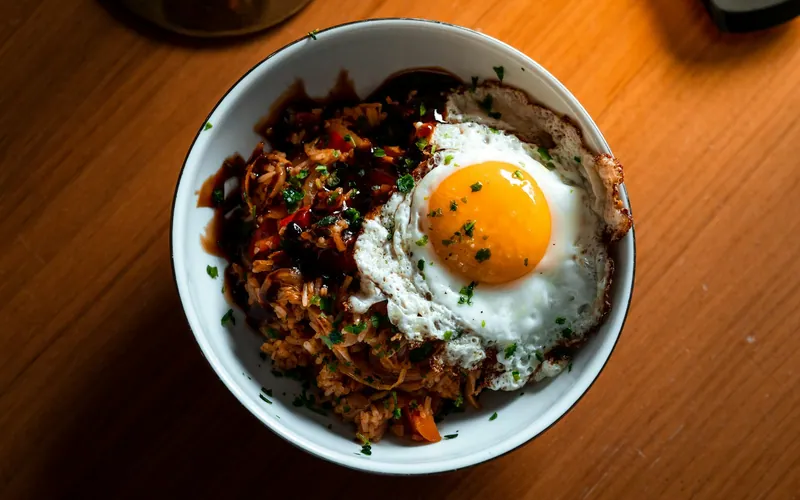
Kimchi Fried Rice with Crispy Fried Egg & Scallions
Cold rice, well-fermented kimchi and gochujang fry into a smoky-spicy skillet meal finished with sesame oil, scallions and crisp-edged eggs.
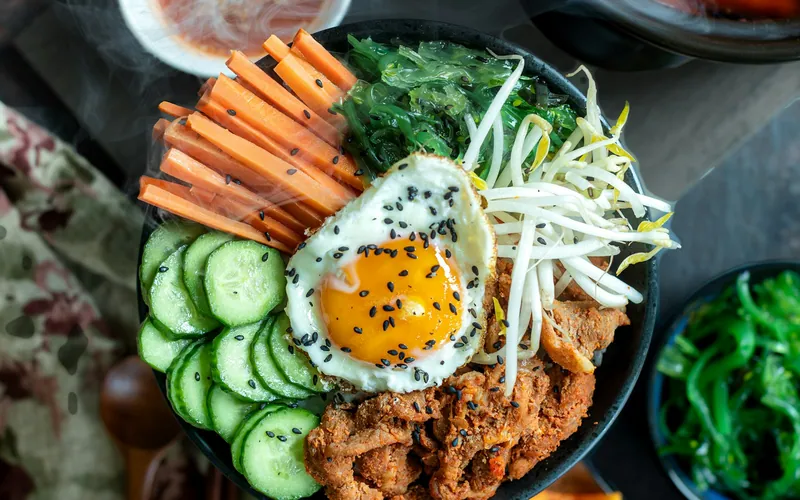
Photo: Maria Klichik / Unsplash · Unsplash License
Family Favorites
Savory gochujang beef, warm rice, crisp cucumber, carrots, sprouts, seaweed and a fried egg become a colorful Korean-inspired dinner built for mixing.
In one small bowl, stir 1 tablespoon soy sauce, brown sugar, 1 teaspoon sesame oil, half the garlic and all the ginger. In a second bowl, whisk the gochujang, 1 tablespoon rice vinegar, honey and warm water until spoonable. Keep both bowls away from the raw beef so the gochujang sauce stays ready for serving.
Toss the cucumber with 1 teaspoon rice vinegar and 1/4 teaspoon kosher salt. Let it stand for 10 minutes, then drain away the released liquid. This quick seasoning keeps the slices crisp and prevents their moisture from pooling in the finished bowls.
Heat a large 12-inch skillet over medium-high. Add 1/2 teaspoon neutral oil and the bean sprouts; cook for 2 minutes, then add 1 teaspoon soy sauce and cook 1 minute more. Transfer to a clean plate. Add another 1/2 teaspoon oil and the carrots, then cook for 3 to 4 minutes until flexible but still bright. Season with the remaining 1/4 teaspoon salt and transfer beside the sprouts.
Add 2 teaspoons neutral oil to the hot skillet. Crumble in the ground beef and press it into a broad layer. Cook undisturbed for 3 minutes, then break it into bite-size pieces and continue cooking for 3 to 4 minutes. Drain excess fat if needed, stir in the soy-sugar mixture and cook for 1 to 2 minutes until glossy. Check several pieces with an instant-read thermometer and confirm the beef reaches 160°F. Transfer it to a clean bowl.
Wipe out loose browned bits and return the skillet to medium heat with the remaining 1 teaspoon neutral oil. Crack in the eggs, season lightly and fry for 3 to 4 minutes until the whites are fully set. For soft yolks, use pasteurized eggs; otherwise cover the skillet and cook until both whites and yolks are firm or the centers reach 160°F.
Divide the hot rice among four wide bowls. Arrange the glazed beef, bean sprouts, carrots, drained cucumber and drained wakame in distinct sections so each component remains visible. Set one fried egg in the center of every bowl, then add the scallions and sesame seeds.
Spoon the gochujang sauce over the bowls or pass it at the table for adjustable heat. Encourage diners to break the yolk and mix the rice, beef, vegetables and sauce thoroughly before eating. Serve promptly while the rice and beef are hot and the cucumber remains cool and crisp.
Useful kitchen gear
Compare the function and specifications first; skip anything your kitchen already handles well.
For best texture, store the rice, beef, cooked vegetables, cucumber, seaweed, eggs and sauce in separate airtight containers. Refrigerate within 2 hours and use within 3 days. Reheat the rice, beef and cooked vegetables with a splash of water until they reach 165°F; add the cold cucumber, seaweed and sauce afterward. Fry fresh eggs when possible. Freeze the glazed beef for up to 2 months, but do not freeze the assembled bowls, cucumber or eggs.
Yes. Cook the rice, beef, sprouts and carrots up to 3 days ahead, cool them promptly and refrigerate each component separately. Slice and season the cucumber on the day you serve it, then fry fresh eggs while the hot components reheat to 165°F.
Two tablespoons make a medium sauce, but brands vary. Start each bowl with 1 teaspoon sauce and add more after mixing. For less heat, replace half the gochujang with mild miso; for more heat, serve extra gochujang at the table.
The cucumber, sprouts or seaweed likely carried too much moisture. Drain the salted cucumber, cook the sprouts until their surface moisture evaporates and press excess dressing from the wakame. Use hot, freshly fluffed rice rather than wet or overcooked rice.
Korean dinner method guide
Compare separately seasoned bibimbap components, one-pan kimchi fried rice, separately sautéed japchae vegetables and quick-marinated bulgogi-style ribeye by rice or noodle base, vegetable treatment, beef cut and make-ahead strategy.
30 min
Cold rice, well-fermented kimchi and gochujang fry into a smoky-spicy skillet meal finished with sesame oil, scallions and crisp-edged eggs.
 60 min
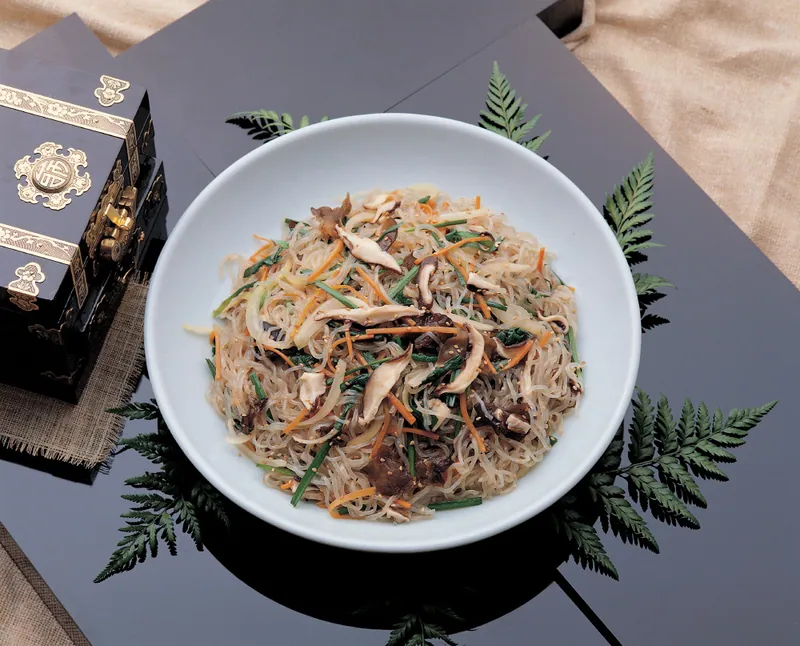
Glossy sweet-potato glass noodles are tossed with tender soy-garlic beef, shiitakes, spinach and crisp vegetables in a balanced sesame dressing.
 35 min
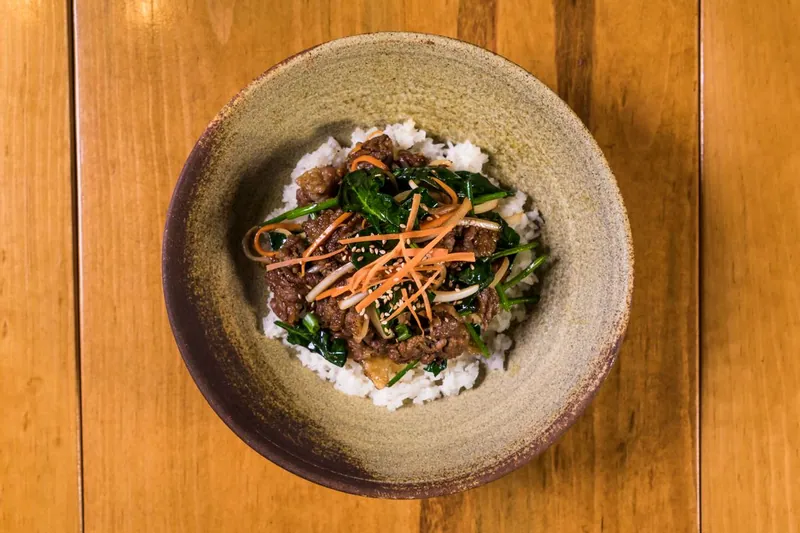
Quick-marinated bulgogi-style ribeye over rice with sesame carrots, crisp cucumbers, and spicy mayo.
Cook next
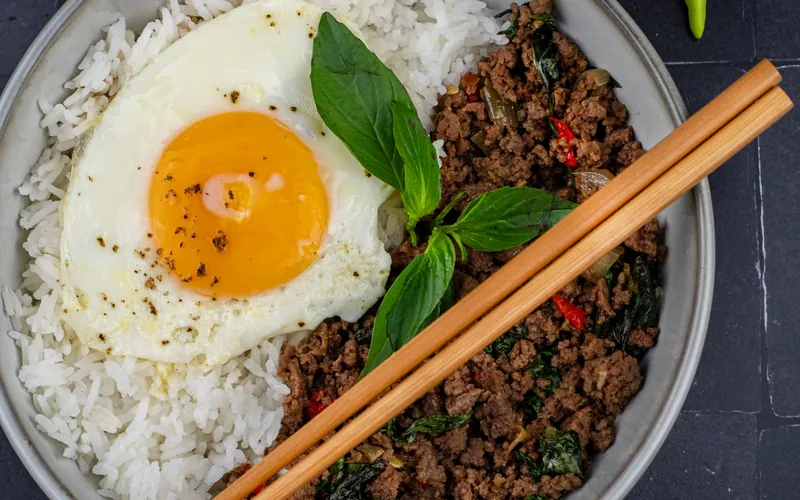 35 min
Savory ground beef, garlic, chiles and Thai basil cook in a glossy fish-sauce stir-fry, then land beside jasmine rice and crisp-edged fried eggs.
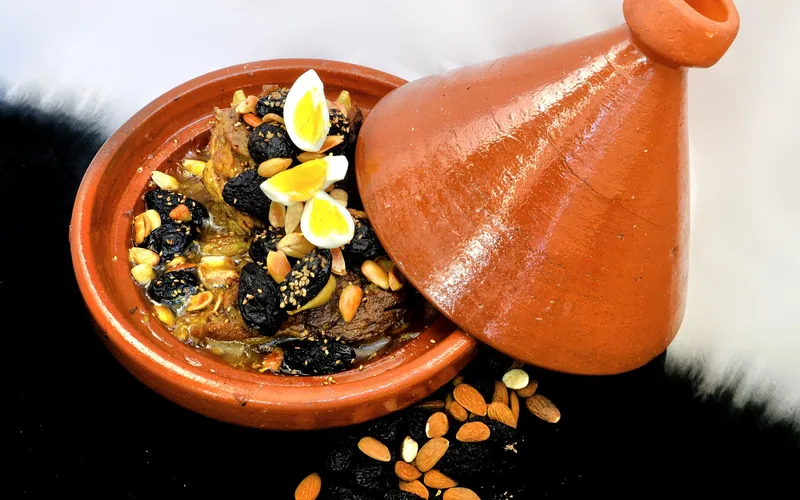 160 min
Fork-tender lamb shoulder braises with warm spices, saffron and honey before being crowned with glossy prunes, toasted almonds, sesame and jammy little quail eggs.
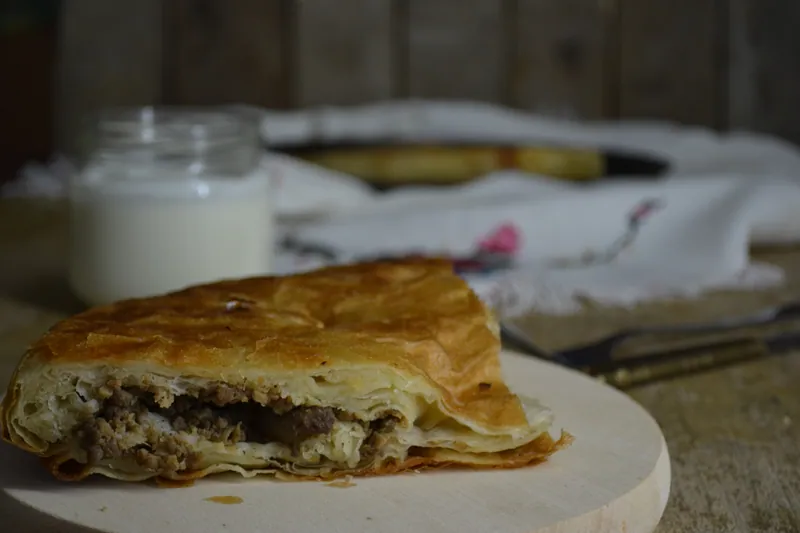 85 min
Crackly phyllo spirals around a savory beef-and-onion filling, then a quick cucumber-yogurt salad turns the crisp pastry into a complete lunch or casual supper.
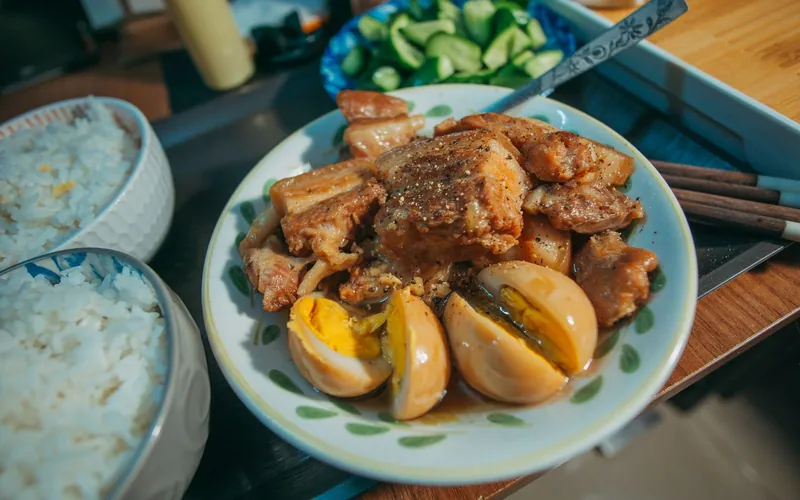 105 min
Pork belly and shoulder braise in soy, cane vinegar, garlic, bay and cracked pepper until tender, then share their glossy sauce with jammy eggs and hot jasmine rice.