 220 min
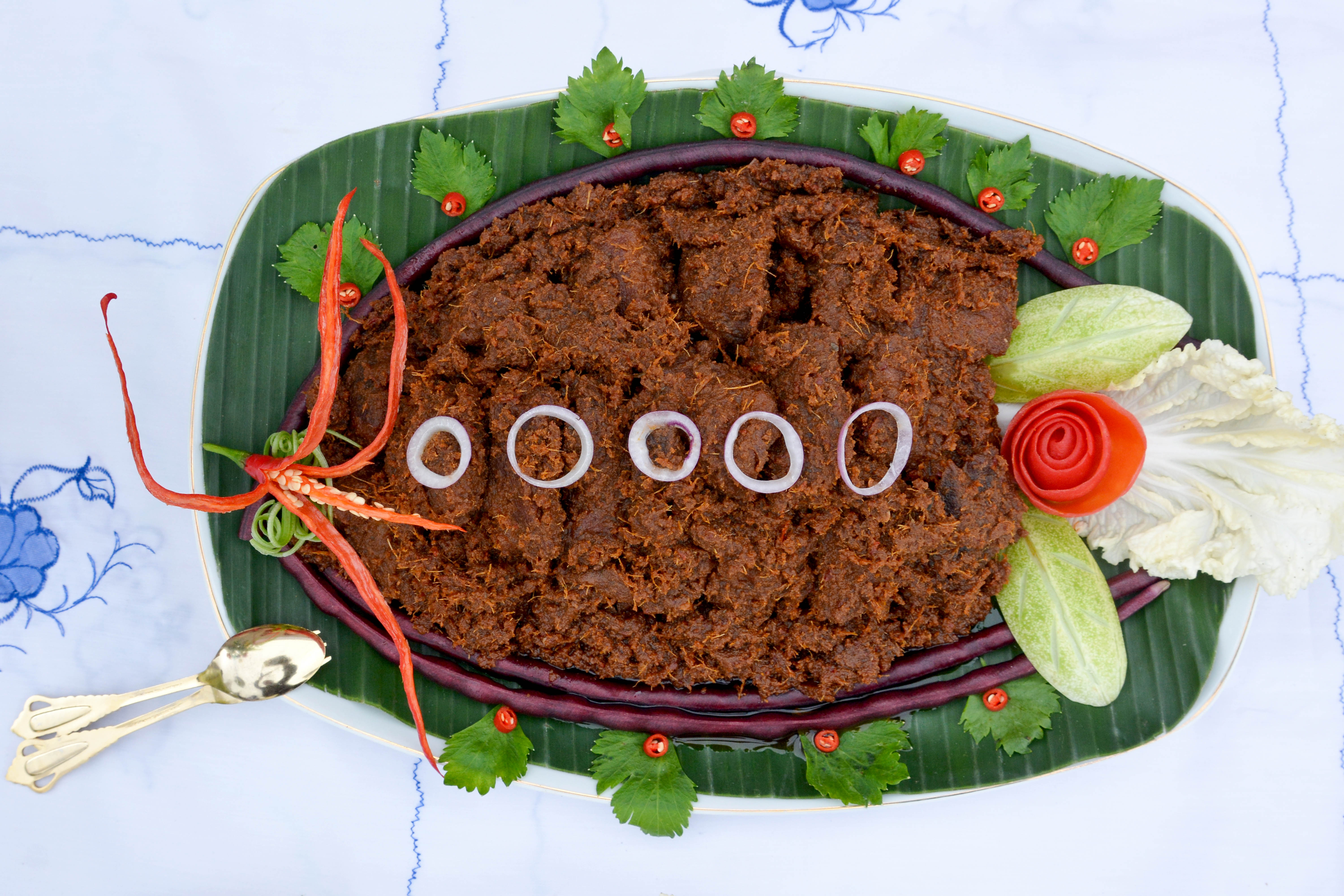
Indonesian Beef Rendang with Coconut & Toasted Spices
Beef chuck slowly braised with coconut milk, lemongrass, galangal and chiles until the sauce fries down into a dark, intensely aromatic coating.
Family Favorites
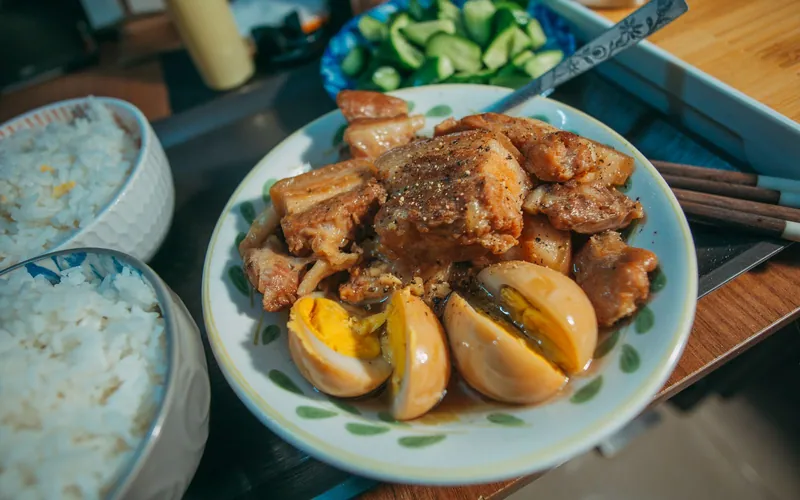
Pork belly and shoulder braise in soy, cane vinegar, garlic, bay and cracked pepper until tender, then share their glossy sauce with jammy eggs and hot jasmine rice.
Pat both cuts of pork very dry and season with the kosher salt. Keep the belly and shoulder in separate piles so the fattier belly can brown first and render enough fat for the leaner shoulder.
Heat the neutral oil in a 5- to 6-quart Dutch oven over medium-high. Brown the belly in two batches for 3 to 4 minutes per broad side; transfer to a plate. Spoon off all but 2 tablespoons fat, then brown the shoulder in two batches. Crowding the pot will steam the meat instead of building the browned flavor that anchors the sauce.
Reduce the heat to medium. Add the crushed garlic and cook for 45 to 60 seconds, stirring, until fragrant and pale gold. Do not let it turn dark or it may become bitter during the braise.
Return all pork and accumulated juices to the pot. Add the vinegar, soy sauce, 1 1/2 cups water, bay leaves, peppercorns and brown sugar if using. Bring to a boil without stirring for 2 minutes so the vinegar's raw edge cooks off, then stir once, cover and reduce to a low simmer.
While the pork braises, lower the eggs into simmering water and cook for 9 minutes. Chill in ice water for 5 minutes and peel. For the rice, combine the rinsed rice and 2 1/2 cups water, bring to a boil, cover, reduce to low and cook for 15 minutes; remove from the heat and rest covered for 10 minutes before fluffing.
Simmer the pork covered for 45 minutes, then turn the pieces and continue for 15 to 25 minutes. Pork is safe at 145°F followed by a 3-minute rest, but shoulder and belly become properly tender closer to 195°F to 205°F; a fork should twist into the largest shoulder piece with little resistance. Add 1/4 cup water if the liquid falls below one-third of the meat.
Add the peeled eggs to the pot for the final 10 minutes of covered cooking, turning once so they color evenly. Transfer the pork and eggs to a platter and discard the bay leaves.
Bring the sauce to a lively simmer and reduce uncovered for 6 to 10 minutes, skimming excess fat, until it lightly coats a spoon. Return the pork and eggs, turn to glaze, and taste before adding salt because soy sauces vary. Halve the eggs and serve with rice, cucumber and scallions.
Useful kitchen gear
Compare the function and specifications first; skip anything your kitchen already handles well.
Cool the pork, sauce and eggs promptly and refrigerate in a shallow airtight container for up to 4 days; refrigerate the rice separately for up to 4 days. Reheat the adobo gently on the stovetop with 2 to 3 tablespoons water until the pork and sauce reach 165°F. Reheat rice covered with a spoonful of water until steaming throughout. Freeze the pork and sauce without eggs for up to 3 months.
The soy sauce may have been full-sodium or the liquid reduced too far. Add hot water 2 tablespoons at a time, then balance with a small splash of vinegar. Next time, use low-sodium soy and stop reducing when the sauce just coats a spoon.
The dish will still work, but letting the vinegar boil undisturbed for about 2 minutes is a useful traditional technique that cooks away its harshest raw aroma before the sauce is mixed.
Cook them separately for 9 minutes, chill immediately, and add them only for the last 10 minutes of the braise. They absorb color and flavor without spending an hour at simmering temperature.
Braising technique
See how uncovered coconut reduction, a covered fruit-and-spice tagine, soy-vinegar adobo and a red-wine oven braise use different liquids and finishing methods to transform collagen-rich cuts.
220 min
Beef chuck slowly braised with coconut milk, lemongrass, galangal and chiles until the sauce fries down into a dark, intensely aromatic coating.
 160 min
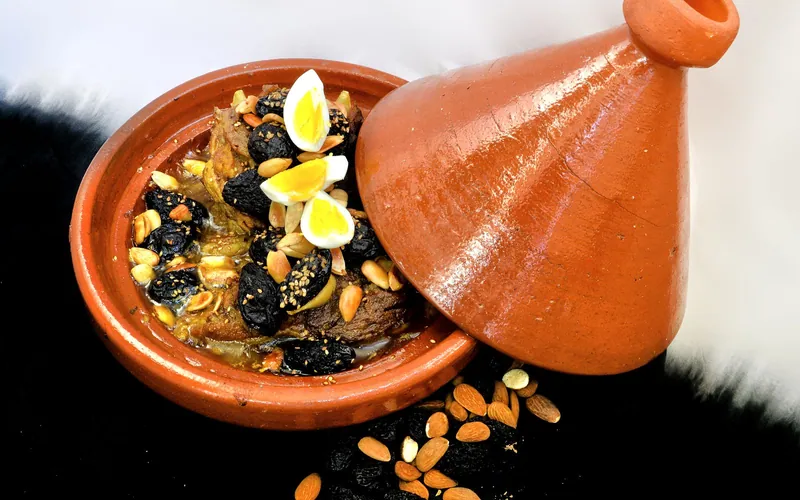
Fork-tender lamb shoulder braises with warm spices, saffron and honey before being crowned with glossy prunes, toasted almonds, sesame and jammy little quail eggs.
 190 min
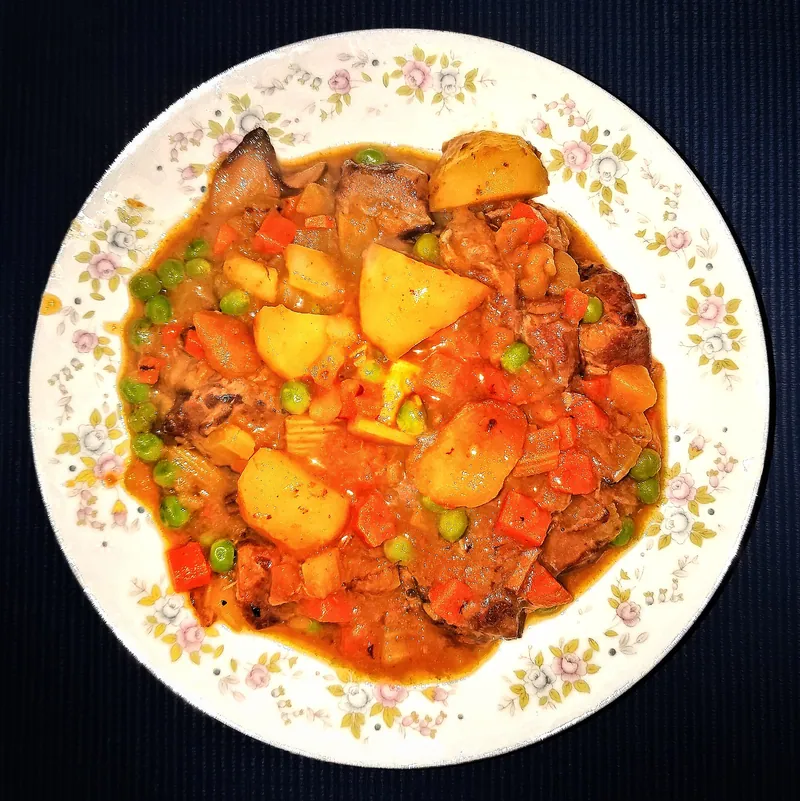
Deeply browned beef chuck, potatoes, carrots and mushrooms become spoon-tender in a red-wine gravy, with sweet peas stirred in just before serving.
Cook next
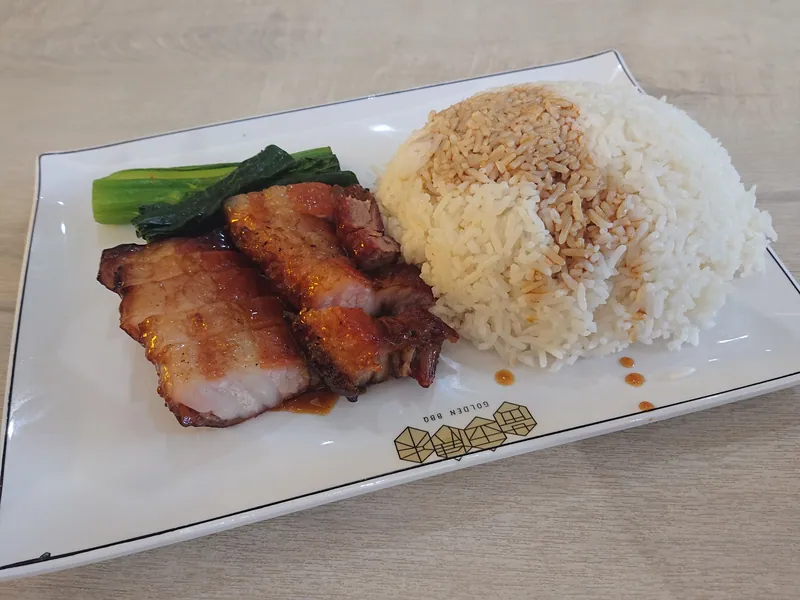 330 min
Oven-roasted pork belly takes on a glossy honey-soy char while jasmine rice and crisp-tender gai lan turn it into a complete takeout-style dinner at home.
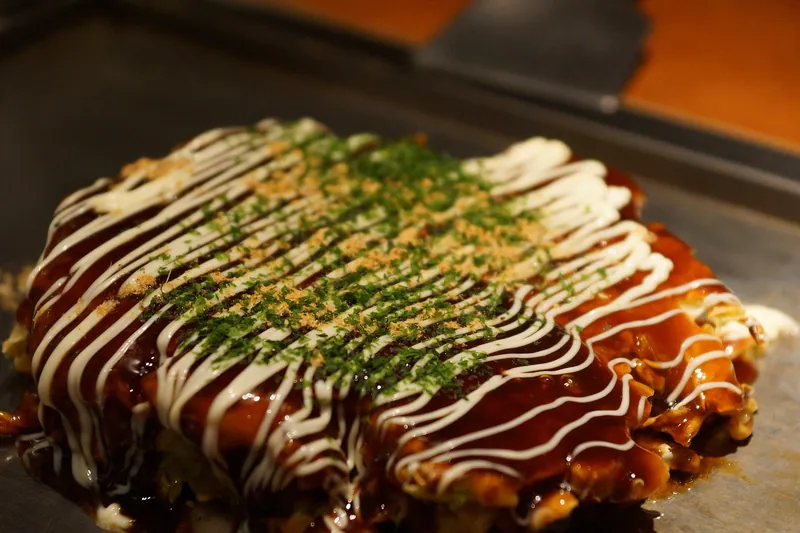 50 min
Crisp-edged Japanese savory pancakes hide a tender cabbage-and-pork center beneath glossy okonomiyaki sauce, Kewpie mayonnaise, aonori and dancing bonito flakes.
160 min
Fork-tender lamb shoulder braises with warm spices, saffron and honey before being crowned with glossy prunes, toasted almonds, sesame and jammy little quail eggs.
 50 min
Crisp golden pastry encloses tuna, potato, capers and egg, with a chopped cucumber-tomato salad and harissa for a bright, satisfying lunch.