 120 min
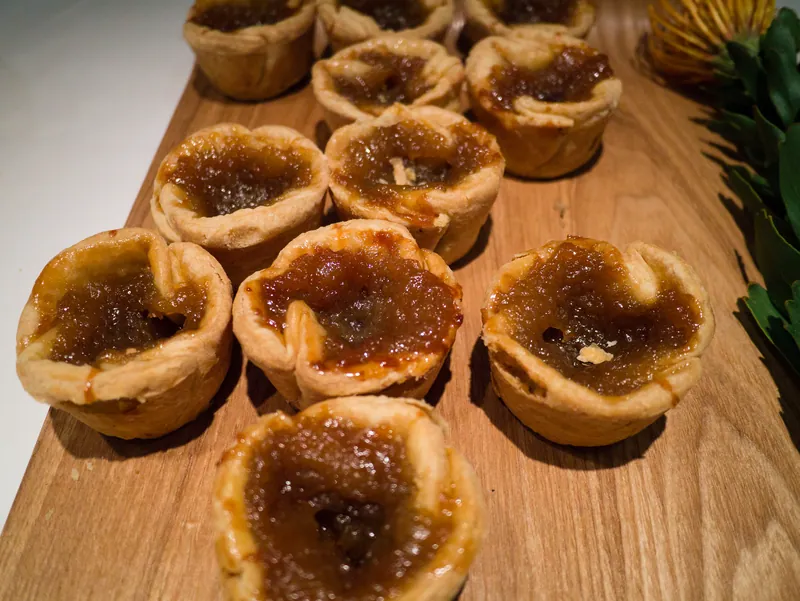
Classic Canadian Butter Tarts with Raisins
Flaky hand-cut pastry cups hold a glossy brown-sugar filling that bakes with caramelized tops, soft centers and plump raisins.
Baking
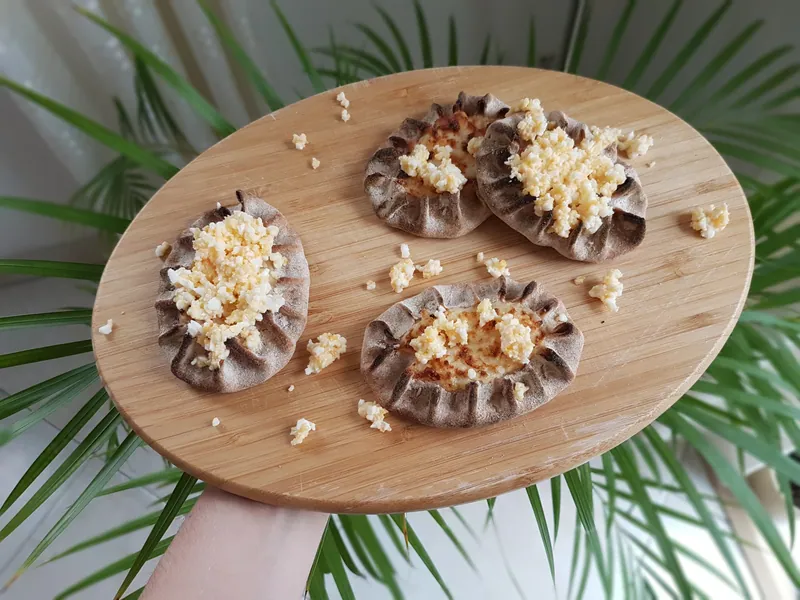
Thin rye shells cradle creamy rice porridge, bake blistered at high heat, then soften under a butter-water glaze before a savory egg-butter finish.
Place the eggs in a small saucepan and cover with cool water by 1 inch. Bring to a full boil over medium-high heat, cover, remove from the heat and stand for 11 minutes. Transfer immediately to ice water for 5 minutes, then peel. The whites and yolks should be completely firm; refrigerate the peeled eggs if the pies are not being assembled within 2 hours.
Combine the rice and 1 cup water in a heavy 3-quart saucepan. Bring to a boil, reduce to low and simmer uncovered for 8 to 10 minutes, until nearly absorbed. Add the milk in three additions while stirring, then add 3/4 teaspoon salt. Cook at the gentlest simmer for 30 to 35 minutes, stirring and scraping the base every 2 to 3 minutes, until the grains are tender and the porridge holds a spoon track for 3 seconds. It should register about 195 to 205°F.
Spread the porridge 1 inch deep on a rimmed plate or quarter-sheet pan. Press parchment directly on the surface and cool for 20 to 25 minutes, until no warmer than 100°F. The filling should be thick enough to mound; hot, loose porridge makes the rye shells gummy and difficult to pleat.
While the porridge cools, set a heavy rimmed sheet pan upside down on the middle rack and heat the oven to 500°F for at least 30 minutes. Cut two sheets of parchment to fit the inverted pan. A fully heated surface gives the thin rye bottoms enough immediate heat to set before they absorb moisture.
Whisk the rye flour, all-purpose flour and remaining 1/2 teaspoon salt in a bowl. Stir in 1/2 cup cool water until no dry flour remains. Knead in the bowl for 60 to 90 seconds. The dough should feel firm and clay-like, not sticky; add water 1 teaspoon at a time only if it cracks when pressed. Cover immediately because rye dough dries quickly.
Roll the dough into a 12-inch log and cut into 12 equal pieces, about 25 g each. Keep all but one covered. On a rye-floured surface, flatten and roll each piece into a 6-by-4-inch oval about 1/16 inch thick, turning and dusting lightly so it does not stick. Stack the ovals between parchment or a clean towel while you finish rolling.
Spoon about 1/4 cup (55 g) cooled porridge down the center of each oval, leaving a 3/4-inch border. Fold the long sides inward so 1 1/2 inches of filling remains exposed. Starting at one end, pinch small pleats every 1/2 inch with both thumbs and forefingers; do not pull the dough across the filling. Taper the ends into a shallow boat shape.
Arrange six pies on each parchment sheet. Slide the first sheet onto the hot inverted pan and bake for 12 to 14 minutes, until the rye edges are dry and dark, the pleats hold their shape and the rice shows scattered golden spots. Rotate once after 7 minutes. Bake the second batch the same way; the filling is already cooked, so color and a fully set shell are the doneness tests.
Melt 3 tablespoons butter and whisk with 3 tablespoons warm water. Brush the hot pies generously on the tops, edges and bottoms, then stack them in a towel-lined bowl and cover for 15 minutes. The trapped steam relaxes the crisp rye shells while the butter carries flavor into the pleats.
Finely chop or grate the firm-cooked eggs. Mash them with the remaining 5 tablespoons softened butter and the white pepper, if using, until spreadable but still visibly textured. Taste before adding any extra salt. Serve two warm pies per person with about 2 tablespoons egg butter, keeping the topping refrigerated until serving.
Useful kitchen gear
Compare the function and specifications first; skip anything your kitchen already handles well.
Cool untopped pies completely and refrigerate them in an airtight container for up to 4 days. Store egg butter separately at 40°F or below, refrigerate within 2 hours and use within 3 to 4 days. Reheat pies uncovered in a 350°F oven for 6 to 8 minutes or in a toaster oven until hot, then rest under a towel for 3 minutes; do not heat the egg butter. Freeze untopped pies in a single layer, then bag for up to 2 months and reheat from frozen at 350°F for 10 to 12 minutes.
Rye flour has little gluten, so the dough must stay covered and properly hydrated. Press a test piece first: if its edge splits immediately, knead 1 teaspoon cool water into the dough and test again. Roll one piece at a time, keep the rest covered and use only enough rye flour to prevent sticking; too much bench flour dries the surface.
Yes. Cook and cool the porridge quickly, cover and refrigerate it for up to 2 days; bring it to cool room temperature so it spreads without tearing the dough. Prepare the egg butter up to 3 days ahead and keep it at 40°F or below. Never leave either dairy-and-egg component out longer than 2 hours.
The shells are intentionally crisp when they leave the oven. Brush every surface immediately with the butter-water mixture, stack the pies while hot and cover them tightly with a towel for 15 minutes. If they remain hard, they were likely rolled too thick or baked too long; aim for 1/16 inch and stop when the rice has scattered golden spots.
Cook next
120 min
Flaky hand-cut pastry cups hold a glossy brown-sugar filling that bakes with caramelized tops, soft centers and plump raisins.
 300 min
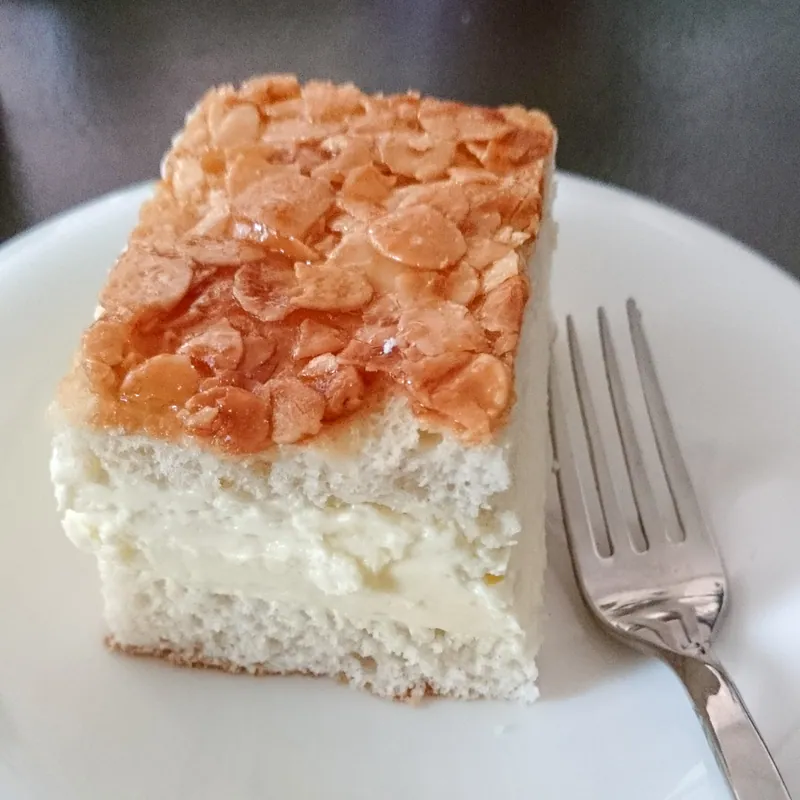
A tender yeast cake bakes beneath a crackly honey-almond crown, then splits around a stable vanilla pastry-cream filling for a bakery-worthy celebration slice.
 245 min
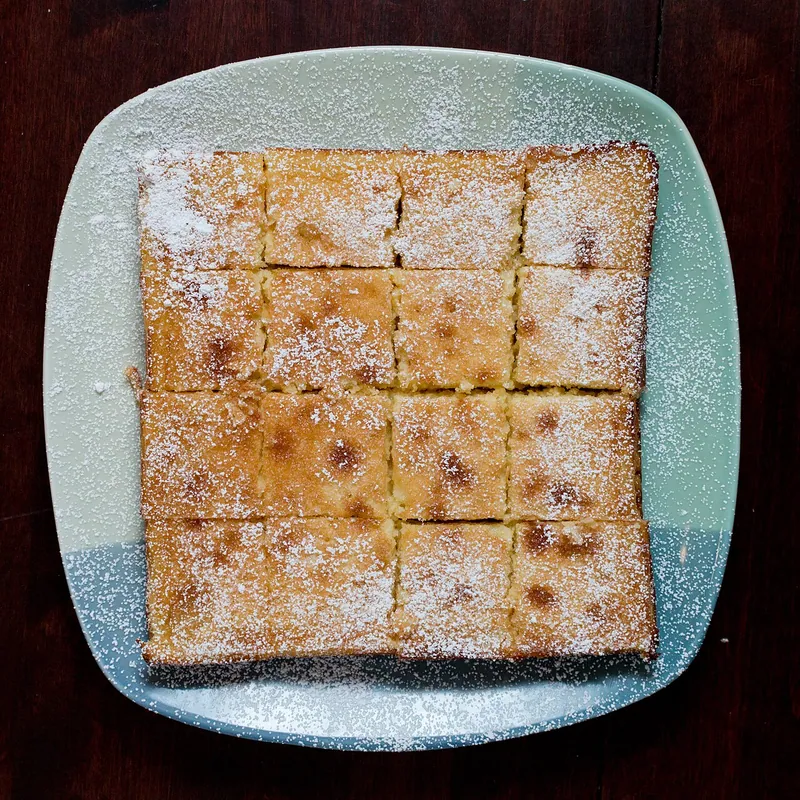
A bright, softly set lemon layer rests on crisp butter shortbread, finished with a snowy dusting of confectioners’ sugar and clean bakery-style edges.
 92 min
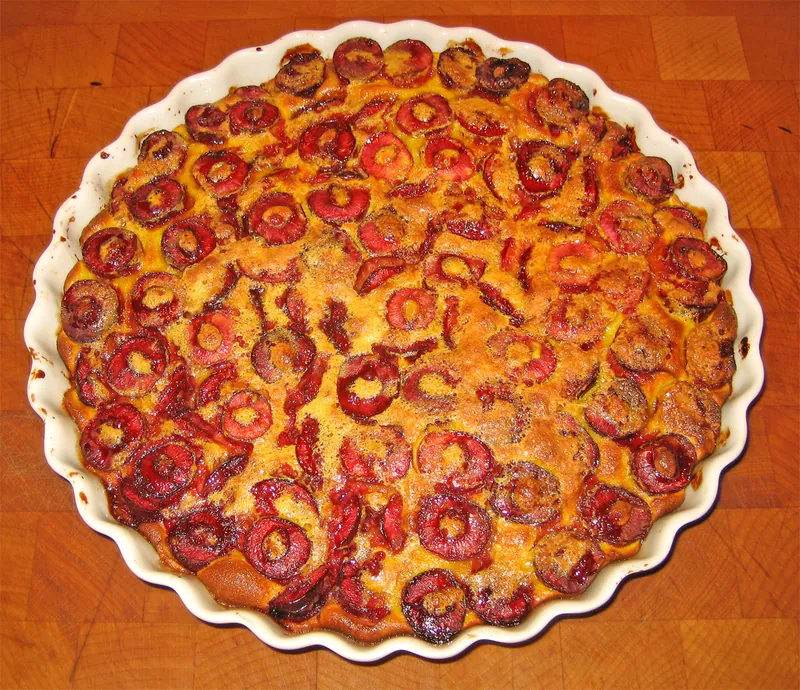
Juicy cherries bake into a softly set vanilla-almond custard with puffed golden edges, making an elegant dessert from one bowl and one baking dish.