Fermented rice-flour and coconut batter cooks into crisp, lacy bowls with tender centers and safely set peppered eggs in this practical home-kitchen guide.
Whisk the rice flour, yeast and sugar in a large bowl. Add 1 cup warm water and the coconut milk, then whisk for 60 seconds until smooth and as thick as pancake batter. The mixture should fall from the whisk in a wide ribbon; add only 1 tablespoon extra water if dry pockets remain. Cover loosely.
Ferment by signs, not only by the clock
Set the covered bowl in a draft-free 72 to 78°F spot for 1 1/2 to 2 1/2 hours. The batter is ready when it has risen by about one-third, shows pinhead bubbles across the surface and smells gently yeasty rather than sharply sour. If the room is below 70°F, allow up to 3 hours.
Thin to pouring-cream consistency
Whisk in the salt, baking soda and 2 teaspoons oil. Add the reserved water 1 tablespoon at a time—usually 1/4 to 1/2 cup—until the batter flows like heavy cream and coats the bowl in a thin sheet. Rest for 15 minutes while the pan heats. Keep the eggs refrigerated during the rest.
Calibrate the hopper pan
Heat a 7- to 8-inch hopper pan, small rounded wok or deep nonstick skillet over medium for 3 minutes. Wipe the interior with a very thin film of oil. Test with 1 teaspoon batter: it should hiss gently and form tiny holes within 10 seconds without browning immediately. Lower the heat for 1 minute if it scorches; raise it slightly if no holes appear.
Swirl one lacy bowl
Stir the batter before each hopper. Pour 1/3 cup into the center, lift the pan with protected hands and make one smooth circular turn so batter runs up the sides while a thicker pool remains in the bottom. Return the pan to medium heat at once. Do not keep swirling after the batter begins to set.
Set the egg under the lid
Immediately crack 1 egg into the thicker center, sprinkle with a pinch of pepper and cover. Cook for 3 to 5 minutes, until the lacy rim is crisp, the center releases from the pan and both egg white and yolk are firm. For the USDA-aligned safety target, check the thick center from the side with an instant-read thermometer; it should reach 160°F.
Release without breaking the rim
Run a thin silicone spatula around the crisp edge, then lift from two points and slide the hopper onto a plate. If it sticks, cover for 30 seconds more rather than scraping. Wipe the pan with a barely oiled paper towel held in tongs before the next hopper.
Repeat and serve to order
Repeat with the remaining batter and eggs, adjusting heat between hoppers. Hold finished hoppers in a single layer on a wire rack in a 200°F oven for no longer than 15 minutes so the rims stay crisp. Serve two per person with lunu miris, coconut sambol or dhal if desired.
Why this works
Why it worksFermentation creates gas bubbles that open the batter into the characteristic porous center and delicate lacy rim.
Why it worksRoom-temperature coconut milk keeps the yeast environment steady and supplies enough fat for tenderness without making the thin edge greasy.
Why it worksFinal thinning after fermentation preserves the batter's gas while letting it run quickly up the curved pan before it sets.
Why it worksOne decisive pan swirl leaves a thicker center for the egg and a thin perimeter that dehydrates into a crisp shell.
Why it worksA lid traps steam to cook the egg and tender center while direct pan heat browns the exposed rice-lace edge.
Useful kitchen gear
Tools that make this easier.
Compare the function and specifications first; skip anything your kitchen already handles well.
Paid links: As an Amazon Associate I earn from qualifying purchases. You pay no additional cost.
A dedicated 7-inch hopper pan gives the deepest bowl, but a 7- to 8-inch carbon-steel wok with a lid is the closest substitute. A small nonstick skillet works, although its hopper will be shallower.
Do not substitute glutinous rice flour; its sticky texture prevents the crisp, fragile lace. Brown rice flour also produces a heavier, less flexible rim.
Carton coconut beverage is too thin. If canned coconut milk is unavailable, whisk 1/2 cup coconut cream with 1/2 cup warm water.
For plain hoppers, omit the eggs and cover each swirled hopper for 2 to 3 minutes, until the center is dry and the edge is crisp.
For a softer yolk, use pasteurized shell eggs and follow their package guidance; otherwise cook both white and yolk firm to the stated 160°F target.
Cook notes
Cultural and source note: Sri Lanka Tourism identifies hoppers, or appa, as a Sri Lankan staple. Egg hoppers are the bowl-shaped fermented rice-and-coconut pancake with an egg cooked in the center; string hoppers are a different steamed noodle preparation. Technique and terminology were cross-checked against Sri Lanka Tourism, Australian Eggs and current Sri Lankan hopper references.
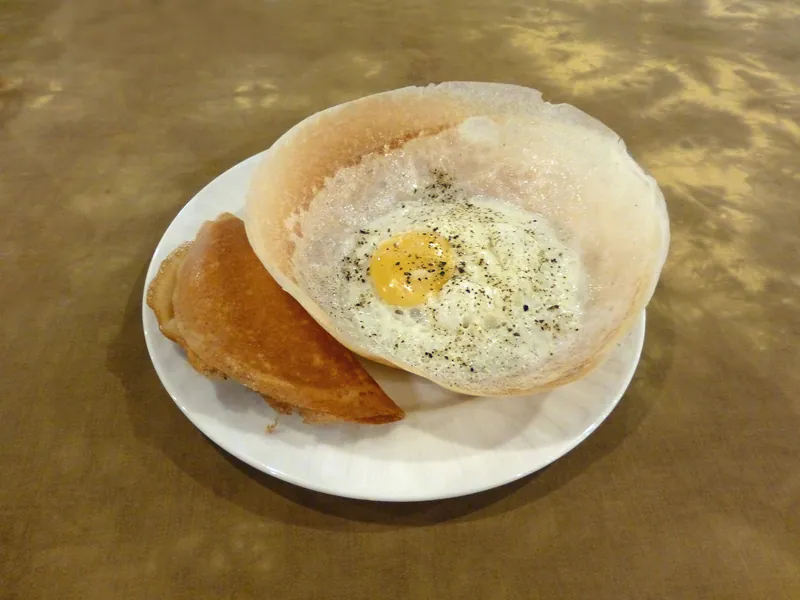
Photo-match record: the selected licensed photograph clearly shows a finished bowl-shaped hopper with a lacy browned rim, thicker pale center, cooked egg and black pepper. Those visible elements all match the title, batter, pan method and alt text; no unseen condiment is claimed.
Fermentation-readiness matrix — 68 to 71°F: expect 2 1/2 to 3 hours; 72 to 78°F: 1 1/2 to 2 1/2 hours; 79 to 82°F: begin checking at 75 minutes. Ready batter rises about one-third, shows fine bubbles and smells gently yeasty. A flat, floury batter needs more time; a sharply sour, collapsed batter has gone too far.
Pan-and-batter diagnostic chart — thick, bready rim: thin batter 1 tablespoon at a time; no lace holes: pan is cool or batter is under-fermented; scorched edge before the egg sets: reduce heat and cool the pan 60 seconds; hopper tears on release: cook 30 seconds longer; center gummy at 160°F: use 1 tablespoon less batter next time; batter slides without coating: pan is over-oiled.
Home-pan comparison — hopper pan: deepest bowl and crispest rim; small rounded wok: close shape but requires two hands and heat-safe grips; deep 8-inch nonstick skillet: easiest release but shallower sides; flat crepe pan: not recommended because it cannot retain the thick center required for the egg.
Eight-hopper service plan: heat the oven and arrange a wire rack before starting; cook hoppers 1 through 4 and hold no longer than 15 minutes; serve the first four while cooking 5 through 8. If serving everyone together, use two matched pans and alternate them rather than stacking finished hoppers.
Storage
Egg hoppers are best eaten immediately. Refrigerate unused fermented batter promptly in a covered container for up to 24 hours; whisk gently and thin with water by the teaspoon before cooking. Refrigerate cooked hoppers within 2 hours in a shallow airtight container for up to 2 days. Reheat in a single layer at 350°F for 6 to 8 minutes, until the egg center reaches 165°F; the rim will not be quite as delicate. Do not freeze finished egg hoppers because the egg becomes rubbery and the rice edge softens.
Questions
Why did my hopper batter fail to make crisp lacy holes?
Check three variables in order. The batter should show fine fermentation bubbles, flow like heavy cream and hit a pan hot enough to hiss gently. Give a flat batter more time, thin an overly thick batter 1 tablespoon at a time, or raise the pan heat slightly. Do not add extra baking soda first; too much creates a soapy taste without fixing an under-heated pan.
Can I make egg hoppers without a special hopper pan?
Yes. Use the smallest rounded wok or deepest 7- to 8-inch nonstick skillet you own and keep a fitted lid nearby. Pour only enough batter to leave a shallow pool in the center, then make one circular turn. The result will be flatter than a traditional hopper but can still have a crisp edge, tender center and properly cooked egg.
Can I prepare the batter the night before?
Ferment it at room temperature only until visibly bubbly, then refrigerate it rather than leaving it warm overnight. Use within 24 hours. Before breakfast, let it stand for 20 minutes, whisk gently and restore heavy-cream consistency with water by the teaspoon. Add the salt and baking soda after the batter returns toward room temperature.
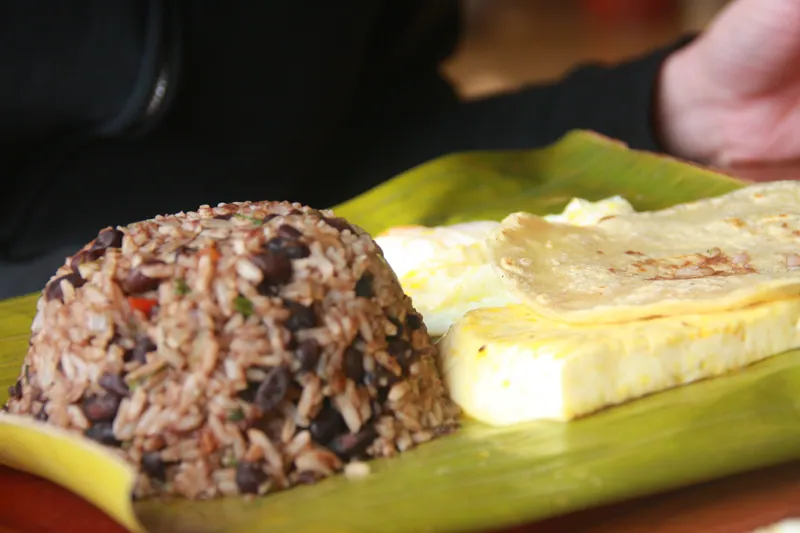
Separate, well-seasoned grains of rice and black beans are folded with pepper, onion, cilantro and Salsa Lizano, then served with fully cooked fried eggs, seared white cheese and warm corn tortillas for a practical Costa Rican-style breakfast.
Creamy rolled oats take a savory turn with white miso and ginger, then finish with gently poached eggs and a crisp sesame-chive crumb for a practical 30-minute breakfast.
Crisp, thin toast encloses fragrant pandan-coconut kaya and cold butter, ready to dip into peppery soft eggs for a complete Singapore kopitiam-style breakfast.
⏱ 80 min$3.10/serving
Sri Lankan Egg Hoppers (Bittara Appa)
Screen stays awake when supported.
1. Build the thick fermentation batterWhisk the rice flour, yeast and sugar in a large bowl. Add 1 cup warm water and the coconut milk, then whisk for 60 seconds until smooth and as thick as pancake batter. The mixture should fall from the whisk in a wide ribbon; add only 1 tablespoon extra water if dry pockets remain. Cover loosely.
2. Ferment by signs, not only by the clockSet the covered bowl in a draft-free 72 to 78°F spot for 1 1/2 to 2 1/2 hours. The batter is ready when it has risen by about one-third, shows pinhead bubbles across the surface and smells gently yeasty rather than sharply sour. If the room is below 70°F, allow up to 3 hours.
3. Thin to pouring-cream consistencyWhisk in the salt, baking soda and 2 teaspoons oil. Add the reserved water 1 tablespoon at a time—usually 1/4 to 1/2 cup—until the batter flows like heavy cream and coats the bowl in a thin sheet. Rest for 15 minutes while the pan heats. Keep the eggs refrigerated during the rest.
4. Calibrate the hopper panHeat a 7- to 8-inch hopper pan, small rounded wok or deep nonstick skillet over medium for 3 minutes. Wipe the interior with a very thin film of oil. Test with 1 teaspoon batter: it should hiss gently and form tiny holes within 10 seconds without browning immediately. Lower the heat for 1 minute if it scorches; raise it slightly if no holes appear.
5. Swirl one lacy bowlStir the batter before each hopper. Pour 1/3 cup into the center, lift the pan with protected hands and make one smooth circular turn so batter runs up the sides while a thicker pool remains in the bottom. Return the pan to medium heat at once. Do not keep swirling after the batter begins to set.
6. Set the egg under the lidImmediately crack 1 egg into the thicker center, sprinkle with a pinch of pepper and cover. Cook for 3 to 5 minutes, until the lacy rim is crisp, the center releases from the pan and both egg white and yolk are firm. For the USDA-aligned safety target, check the thick center from the side with an instant-read thermometer; it should reach 160°F.
7. Release without breaking the rimRun a thin silicone spatula around the crisp edge, then lift from two points and slide the hopper onto a plate. If it sticks, cover for 30 seconds more rather than scraping. Wipe the pan with a barely oiled paper towel held in tongs before the next hopper.
8. Repeat and serve to orderRepeat with the remaining batter and eggs, adjusting heat between hoppers. Hold finished hoppers in a single layer on a wire rack in a 200°F oven for no longer than 15 minutes so the rims stay crisp. Serve two per person with lunu miris, coconut sambol or dhal if desired.
 80 min