 50 min
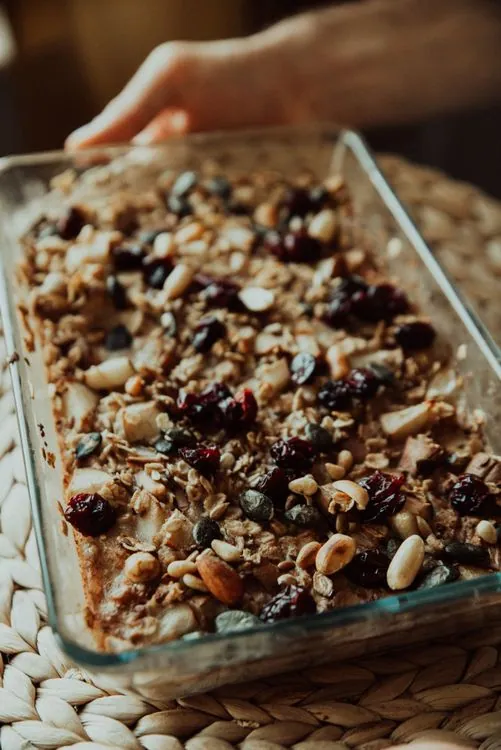
Apple Cinnamon Baked Oatmeal
Warm, sliceable oatmeal with tender apples and a crisp walnut top—breakfast for the whole week in one pan.
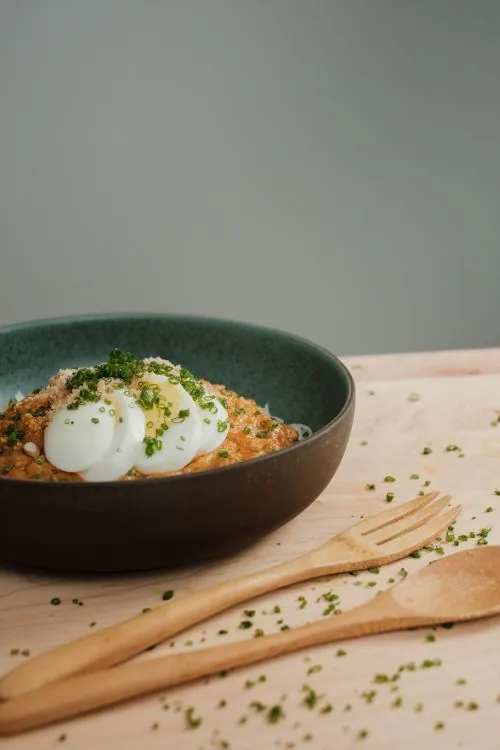
Photo: Airam Dato-on / Pexels · Pexels License
Breakfast Recipes
Creamy rolled oats take a savory turn with white miso and ginger, then finish with gently poached eggs and a crisp sesame-chive crumb for a practical 30-minute breakfast.
Heat a small skillet over medium-low. Add the sesame oil, panko, sesame seeds and 1/8 teaspoon salt. Cook for 3 to 4 minutes, stirring often, until evenly golden. Transfer to a plate, cool for 2 minutes, then stir in 1 tablespoon chives so they stay bright.
Heat the neutral oil in a 2-quart saucepan over medium. Add the ginger and cook for 30 seconds, stirring, until fragrant but not browned. Stir in the rolled oats and toast for 1 minute so every flake is lightly coated.
Add 2 cups water and bring to a lively simmer. Reduce the heat to medium-low and cook for 8 minutes, stirring every 2 minutes. Add the milk and simmer 3 to 5 minutes more, stirring frequently, until the oats are tender and flow slowly from a spoon. Remove from the heat.
While the oats cook, fill a wide saucepan with 2 inches of water, add the white vinegar and bring to a bare simmer; small bubbles should rise without a rolling boil. Crack each egg into a separate cup. Slide in the eggs one at a time and cook for 3 1/2 to 4 1/2 minutes, until the whites are completely opaque and set and the yolks are as firm as desired. For people at higher risk from foodborne illness, use pasteurized eggs or continue cooking until each egg reaches 160°F. Lift with a slotted spoon and blot underneath with a clean towel.
Whisk the miso with 1/4 cup hot oats in a small bowl until smooth. Stir the mixture back into the saucepan with the soy sauce and rice vinegar. Keep the pan off the heat so the miso stays smooth. Taste before adding any salt; miso and soy sauce supply most of the seasoning.
Divide the oats between two dark, shallow bowls. Set one poached egg on each serving, then scatter with the sesame-chive crunch, remaining 1 tablespoon chives and black pepper. Serve immediately while the crumb is crisp.
Useful kitchen gear
Compare the function and specifications first; skip anything your kitchen already handles well.
Refrigerate the cooked oats in a shallow airtight container for up to 4 days and the sesame-chive crunch at room temperature for up to 2 days. Refrigerate cooked eggs separately for no more than 2 days. Reheat oats with 2 to 3 tablespoons water or milk per serving, stirring on the stovetop or halfway through microwaving, until they reach 165°F. Reheat fully cooked eggs in barely simmering water for 1 minute; for best texture, poach fresh eggs and add the crunch only after reheating. Freeze the plain seasoned oats for up to 1 month, but do not freeze the eggs or crumb.
The texture is familiar, but ginger, miso, soy sauce and rice vinegar move the flavor firmly toward a savory grain bowl. Toasting the oats also adds a nuttier flavor than simply boiling them in milk.
Use fresh eggs, crack each into a cup, keep the water at a bare simmer and lower the cup close to the surface before sliding the egg in. Vinegar helps the white set, but a rolling boil will still pull it apart.
Yes. Portion the cooked oats and crumb separately for up to 4 days, then reheat the oats to 165°F with a splash of water or milk. Poach an egg fresh when possible, or substitute a peeled hard-cooked egg for easier transport.
Breakfast base and egg guide
Compare creamy stovetop miso oats with sweet baked oatmeal, pressure-cooked fava beans and poached eggs over garlicky yogurt by base, texture, active time and make-ahead limits.
50 min
Warm, sliceable oatmeal with tender apples and a crisp walnut top—breakfast for the whole week in one pan.
 100 min
Creamy whole fava beans pressure-cook from an overnight soak, then become a lemon-cumin breakfast platter with warm pita, pickles, tomato and peppery greens.
 20 min
Soft poached eggs settle into cool garlicky yogurt under warm Aleppo-pepper butter and fresh dill for a fast, budget-friendly Turkish breakfast.
Cook next
20 min
Soft poached eggs settle into cool garlicky yogurt under warm Aleppo-pepper butter and fresh dill for a fast, budget-friendly Turkish breakfast.
 55 min
Well-drained farmer cheese makes tender, protein-rich griddle cakes with crisp golden edges, finished with cool sour cream, raspberries and jewel-like candied fruit.
 40 min
Fluffy eggs, crisp potatoes, sausage, peppers, and cheese wrapped for grab-and-go mornings that do not taste like compromise.
 145 min
An enriched yeasted dough studded with pearl sugar cooks into dense, tender waffles with deeply caramelized edges and crisp sugar pockets.