 70 min
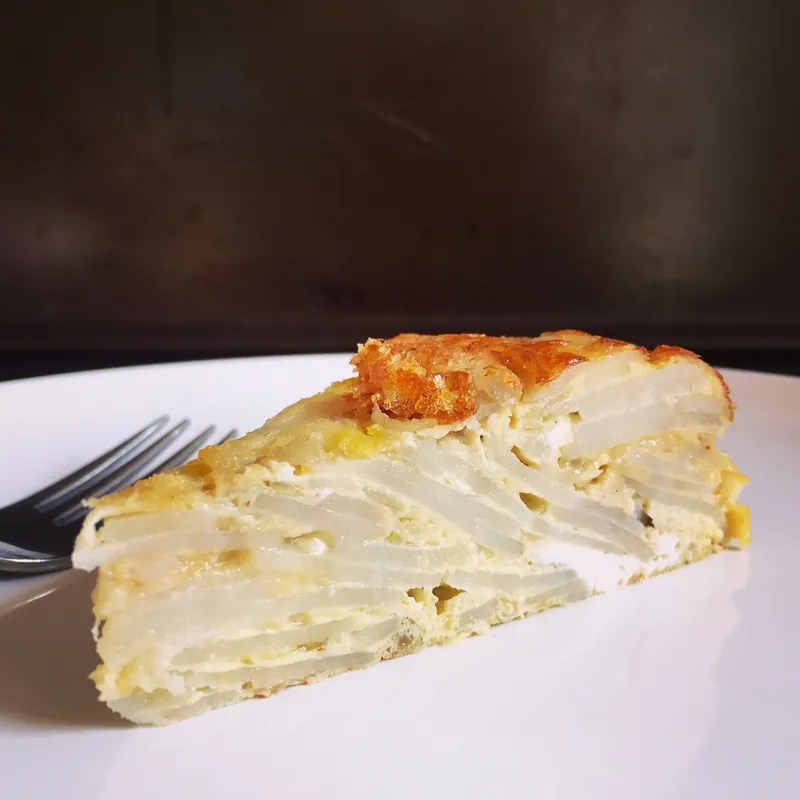
Spanish Tortilla Española with Potato & Onion
Slow-softened potato and onion set inside a golden egg round that slices cleanly for brunch, tapas or a packable room-temperature lunch.
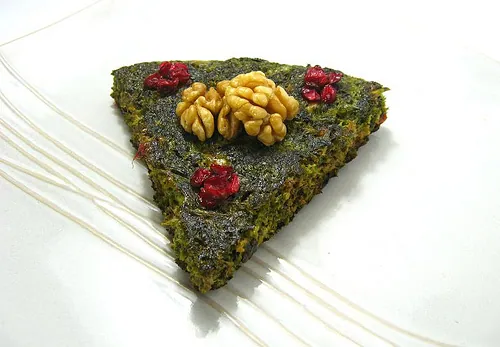
Photo: Sonabona / Wikimedia Commons · CC0 1.0
Dinner
A deep-green, herb-packed Persian egg cake bakes up tender beneath a burnished crust, with toasted walnuts and tart barberries adding the exact crunch and jewel-bright finish shown in every wedge.
Set a rack in the middle of the oven and heat to 350°F. Brush the bottom and sides of a 10-inch oven-safe nonstick or well-seasoned skillet with 1 tablespoon olive oil. Set the remaining oil beside the stove; the egg mixture should go into a hot, freshly oiled pan as soon as it is mixed.
Spin the parsley, cilantro, dill, chives and scallion greens completely dry, then blot any damp spots with a clean towel. Working in four batches, pulse the herbs in a food processor 6 to 8 times until finely chopped but not wet or puréed. Measure 5 packed cups; if chopping by hand, use a sharp knife and stop before the herbs release a puddle of green liquid.
In a large bowl, whisk the eggs until the whites and yolks are fully blended. Sprinkle the flour, baking powder, turmeric, salt and black pepper evenly over the surface and whisk until no flour pockets remain. Fold in the chopped herbs, 1/3 cup walnuts and 1/4 cup barberries. The mixture will look far more like herbs coated with egg than a conventional frittata batter.
Heat the prepared skillet over medium for 90 seconds. Add the remaining 2 tablespoons olive oil and swirl to coat. Scrape in the herb mixture, spread it level without packing it down and cook undisturbed for 4 minutes, until the edge bubbles gently and a thin set rim appears. Reduce the heat if the oil smokes or the herbs at the edge blacken.
Transfer the skillet to the 350°F oven and bake for 18 to 22 minutes. Begin checking at 18 minutes: the center should be firm to a light press, a thin knife should come out without liquid egg and a thermometer inserted into the center should register 160°F. Do not wait for the center to brown; the surface stays deep green while the underside and rim become golden.
Switch the oven to broil and move the skillet about 6 inches from the element for 1 to 2 minutes, watching continuously, until the high spots are lightly bronzed. Remove the skillet with a dry oven mitt and immediately cover the hot handle with a second mitt or handle sleeve so no one grabs it. Rest for 8 minutes.
Run a thin silicone spatula around the edge, invert the kuku onto a plate, then invert again onto a serving platter so the green top faces up. Press the remaining walnut pieces and barberries lightly into the surface while it is warm. Cut into 6 triangular wedges with a serrated knife, wiping the blade between cuts.
Serve one wedge per person with yogurt, warm flatbread, radishes and cucumber. Kuku sabzi is equally useful at room temperature, but do not leave it out longer than 2 hours total. For a smaller appetizer portion, cut each wedge in half after the kuku has cooled enough to hold a clean edge.
Useful kitchen gear
Compare the function and specifications first; skip anything your kitchen already handles well.
Cool leftover kuku within 2 hours, then refrigerate wedges in a shallow airtight container at 40°F or below for up to 4 days. Pack yogurt and vegetables separately. Reheat uncovered on a parchment-lined sheet pan at 325°F for 10 to 12 minutes, until the center reaches 165°F, or enjoy at room temperature after no more than 30 minutes out of the refrigerator. Freeze individually wrapped wedges for up to 2 months; thaw overnight in the refrigerator and reheat in the oven. Microwaving is safe but softens the crust, so use 50% power in 30-second bursts only when speed matters.
The herbs were probably wet, chopped into a paste or measured loosely. Spin and blot them dry, pulse only until finely chopped and pack five full cups before mixing. Also let the baked kuku rest 8 minutes so the egg structure firms before you invert and cut it.
Yes. Wash, dry and chop them up to 1 day ahead, then refrigerate in an airtight container lined with a dry towel. Mix them with the eggs only when the skillet and oven are ready; salted raw egg draws water from the herbs and should not wait on the counter.
No. Traditional versions may be cut or flipped to brown both sides, but the stovetop-to-oven method gives a stable browned base and a safely set 160°F center without maneuvering a heavy, herb-filled round. A final one- to two-minute broil adds color to the top while preserving clean wedges.
Egg cakes by structure and pan technique
Compare Persian kuku sabzi built from five packed cups of herbs, Spanish tortilla structured with sliced potato and onion, and a cottage-cheese frittata lightened with dairy by egg ratio, moisture control, stovetop-to-oven technique, safe center cue and make-ahead texture.
70 min
Slow-softened potato and onion set inside a golden egg round that slices cleanly for brunch, tapas or a packable room-temperature lunch.
 45 min
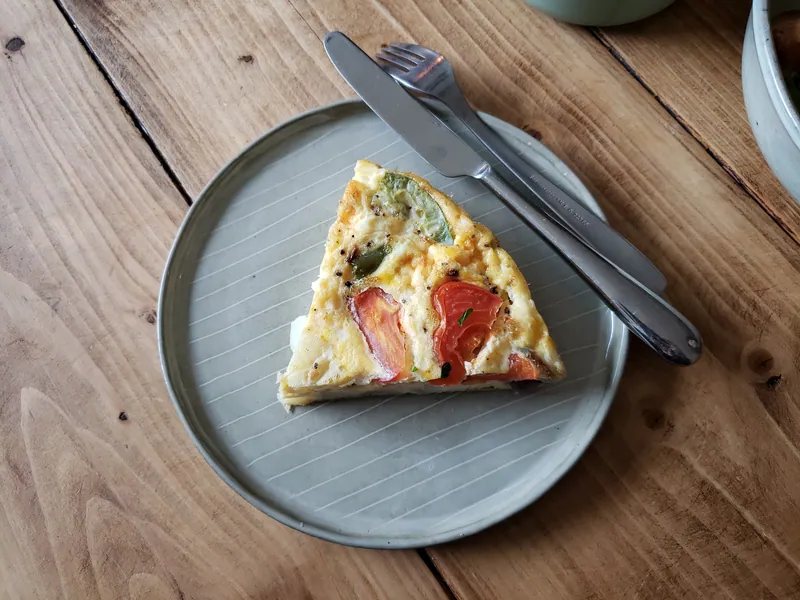
Creamy cottage cheese disappears into tender eggs while sweet tomatoes and sautéed green pepper make this skillet breakfast colorful, savory and meal-prep friendly.
Cook next
 85 min
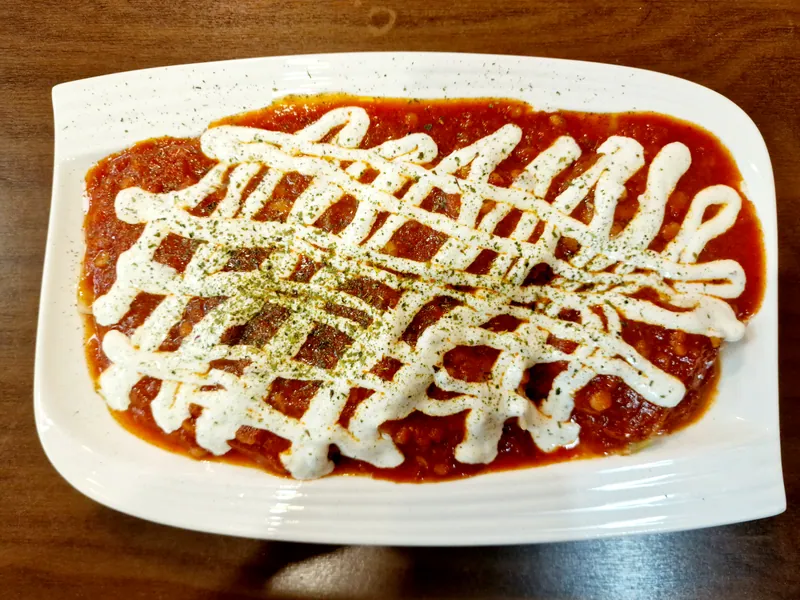
Tender leek-filled dumplings sit in a warmly spiced tomato sauce beneath cool garlic yogurt and dried mint—a practical wrapper-based route to an Afghan gathering dish with vivid hot-cold contrast.
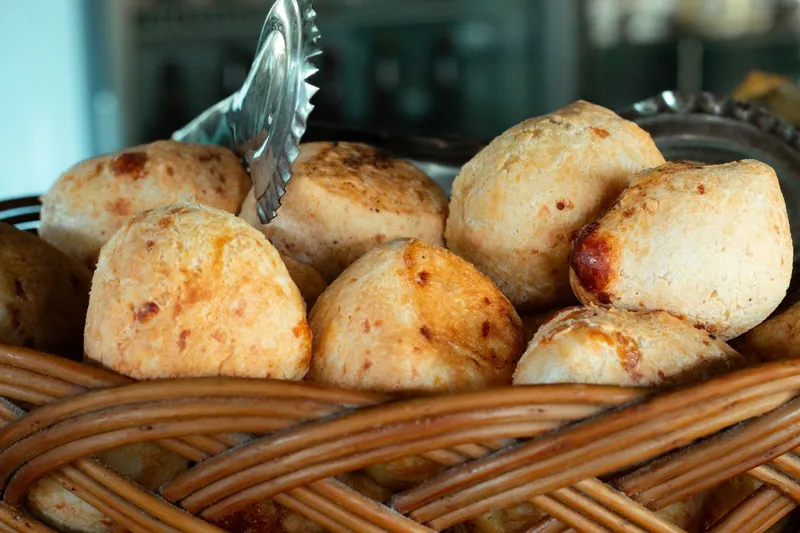 70 min
Hot milk and oil scald tapioca starch into a stretchy dough, while Parmesan and low-moisture mozzarella make these naturally gluten-free Brazilian cheese breads crisp outside, chewy within and deeply savory.
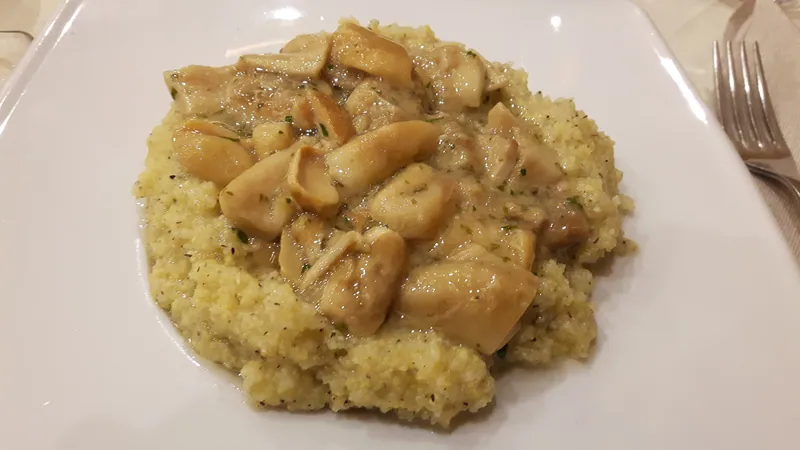 55 min
Pot-in-pot pressure cooking keeps coarse cornmeal off the heating element while a skillet of deeply browned mushrooms makes this meatless dinner feel complete.
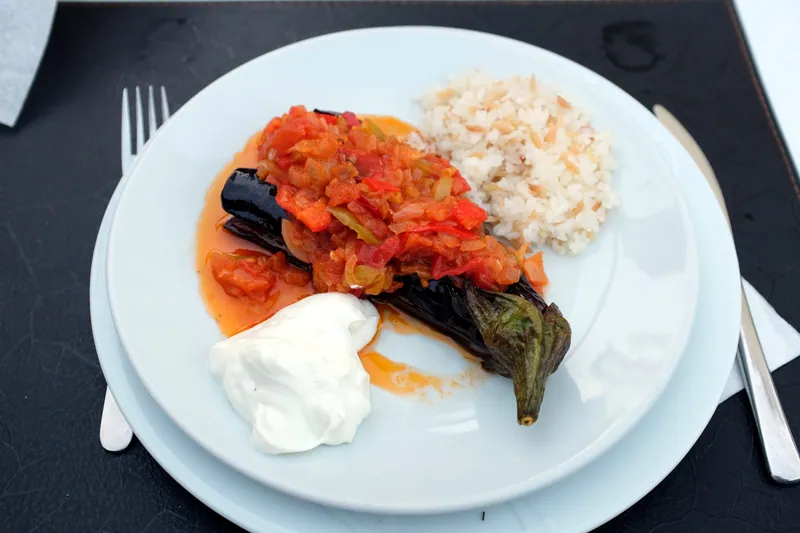 105 min
Whole eggplants collapse around a sweet tomato-onion filling, then pair with lemony rice and cool yogurt for a generous meatless dinner.