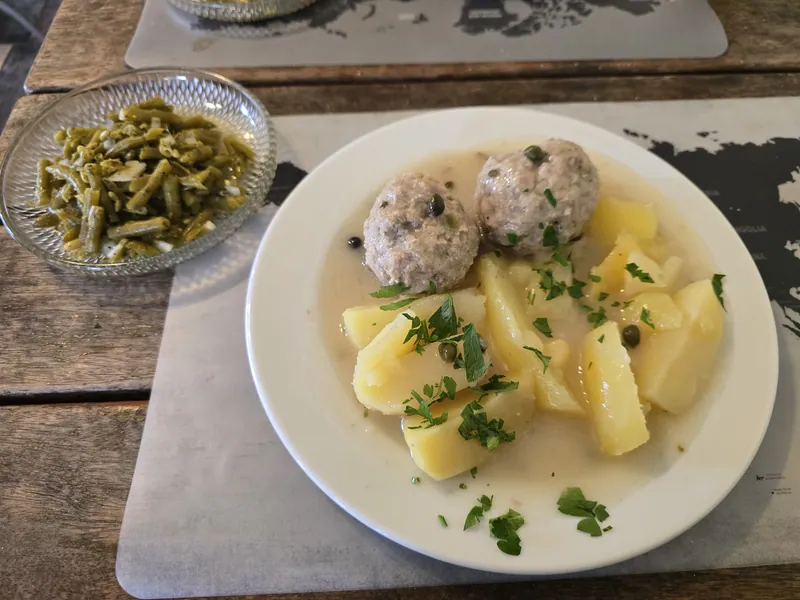
German Königsberger Klopse with Caper Cream Sauce, Potatoes & Green Beans
Tender beef-and-veal meatballs poach gently before their broth becomes a lemony caper cream sauce, with boiled potatoes and a sharp green-bean salad completing the photographed German plate.
Combine the torn bread and milk in a large bowl and press to moisten; rest 10 minutes. Meanwhile, melt 1 tablespoon butter in a small skillet over medium-low. Add the finely chopped onion and cook 6 to 8 minutes, stirring, until translucent but not browned. Stir in the anchovy paste for 30 seconds, then spread the mixture on a plate and cool for 5 minutes.
Mix and portion twelve tender meatballs
Mash the soaked bread into a smooth paste. Add the cooled onion mixture, beef, veal, egg, 1 tablespoon parsley, 1 1/4 teaspoons salt, 1/4 teaspoon pepper and nutmeg. Mix gently with a fork, then clean hands, only until evenly combined. With damp hands, shape 12 equal meatballs, about 2 2/3 ounces or 75 g each. Arrange on a clean tray and refrigerate while the broth heats.
Build a quiet poaching broth
Pour the beef broth into a wide 6-quart Dutch oven. Add the halved onion, bay leaves and peppercorns and bring just to a boil. Reduce to 180–190°F: the surface should tremble with only an occasional bubble. Boiling hard can make the meatballs tough and break their pale surfaces.
Poach and verify the meatballs
Lower the meatballs into the broth in one uncrowded layer, using two batches if your pot is narrower than 11 inches. Maintain 180–190°F and poach for 18 to 22 minutes, turning once, until several meatballs from different parts of the pot register at least 160°F through the center. Transfer them with a slotted spoon to a clean tray and tent loosely; never return cooked meatballs to the raw-meat tray.
Cook the potatoes until creamy inside
While the meatballs poach, place the potatoes in a saucepan, cover with cold water by 1 inch and season the water generously with salt. Bring to a boil, then simmer 15 to 20 minutes, until a paring knife slides through the centers without resistance. Drain, return to the warm pan, cover and hold off heat.
Dress the warm green beans
Bring a second saucepan of salted water to a boil. Add the green beans and cook 4 to 6 minutes, until bright and crisp-tender. Drain well. In a serving bowl whisk the shallot, 2 tablespoons vinegar, Dijon, neutral oil, 1/4 teaspoon salt and remaining 1/4 teaspoon pepper. Toss in the warm beans so they absorb the dressing; set aside at room temperature while the sauce is finished.
Strain and measure the flavored broth
Pour the poaching broth through a fine-mesh strainer into a heatproof bowl and discard the onion, bay and peppercorns. Skim excess surface fat, then measure 3 1/2 cups broth for the sauce. If you have less, add water; if you have more, reserve the extra for reheating or soup. Wipe the Dutch oven dry.
Whisk a smooth caper cream sauce
Melt the remaining 5 tablespoons butter in the Dutch oven over medium. Whisk in the flour and cook 2 minutes without browning. Add the measured broth about 1/2 cup at a time, whisking smooth after every addition. Simmer 5 to 7 minutes, whisking often, until the sauce coats a spoon. Reduce the heat to low and whisk in the cream, capers, caper brine, lemon zest, lemon juice, remaining 1/2 teaspoon salt and 1 tablespoon parsley. Do not let the cream sauce boil hard.
Warm the meatballs without overcooking
Return the cooked meatballs and any clean tray juices to the sauce. Heat at a bare simmer for 4 to 6 minutes, turning gently, until the centers are hot and the sauce clings to their pale surfaces. Taste only now and adjust with up to 1 additional teaspoon lemon juice or a small pinch of salt; capers, anchovies and broth vary in salinity.
Plate every photographed component
Divide the boiled potatoes among six warm plates and spoon sauce partly over them. Add two large meatballs per plate with visible capers and finish with the remaining parsley. Serve the dressed green beans alongside or in a small side bowl, matching the photographed presentation. Serve promptly while the sauce is fluid and the potatoes are hot.
Why this works
Why it worksMilk-soaked bread holds moisture inside the beef-and-veal mixture, while gentle mixing limits the protein tightening that makes meatballs springy or dense.
Why it worksSoftened onion and a small amount of anchovy season the meat throughout; the anchovy dissolves into savoriness rather than remaining as identifiable fish pieces.
Why it worksPoaching at 180–190°F cooks the meatballs evenly to a safe 160°F while preserving the pale, tender exterior visible in the finished dish.
Why it worksStrained poaching broth carries the meatball seasoning into the roux-thickened sauce, so the sauce tastes integrated rather than like cream added separately.
Why it worksCaper brine and lemon balance the butter and cream, while vinegary warm green beans provide a sharper contrast to the mild potatoes and sauce.
Useful kitchen gear
Tools that make this easier.
Compare the function and specifications first; skip anything your kitchen already handles well.
Paid links: As an Amazon Associate I earn from qualifying purchases. You pay no additional cost.
Use 2 pounds 90% lean ground beef if ground veal is unavailable. The result will be slightly firmer and beefier; keep the 160°F minimum center temperature.
For a fish-free variation, omit the anchovies and add 1 teaspoon Worcestershire sauce to the cooled onion mixture; check the label if fish avoidance is allergy-related because standard Worcestershire contains anchovy.
For gluten-free klopse, replace the bread with 3/4 cup gluten-free soft bread and use a measure-for-measure gluten-free flour blend in the sauce.
Half-and-half can replace the heavy cream, but keep the sauce below a boil after adding it to reduce the chance of curdling.
Mashed potatoes can replace boiled potatoes, but the pictured plate and this recipe's timing use distinct boiled pieces that catch the caper sauce.
Cook notes
Königsberger Klopse are associated with the former East Prussian city of Königsberg and are defined by gently cooked meatballs with a tart caper sauce. This beef-and-veal version omits pork while retaining anchovy, poaching broth, capers and lemon as the core flavor structure.
USDA guidance sets 160°F as the safe minimum internal temperature for ground beef and ground veal. Check several meatballs, including the largest and one from a cooler edge of the pot, because color is not a reliable doneness test.
The CC BY-SA 4.0 photograph was inspected at full size twice. It clearly shows two large pale meatballs, capers in a light sauce, boiled potato pieces, parsley and a green-bean salad; the title, quantities, method, plating direction and alt text reproduce those visible elements.
Keep the poaching liquid below a full simmer. If a test meatball cracks, lower the heat and compress the remaining portions once gently between damp palms before continuing.
Calories and cost estimate two large meatballs, one-sixth of the sauce, potatoes and dressed beans. Ground veal drives the price; the all-beef substitution is usually less expensive.
Storage
Cool the meatballs and sauce in a shallow container within 2 hours; refrigerate at 40°F or below for up to 4 days. Refrigerate potatoes and bean salad separately for up to 4 days. Reheat meatballs and sauce gently in a covered saucepan with a splash of reserved broth until several centers reach 165°F; boil the reheated sauce briefly, then reduce the heat. Reheat potatoes covered at 350°F or in the microwave to 165°F. Serve leftover beans cool or at room temperature rather than repeatedly heating them. Freeze meatballs in sauce for up to 2 months, thaw overnight in the refrigerator and whisk the sauce as it reheats because cream sauces can separate; do not freeze the potatoes or bean salad.
Questions
Why did my Königsberger Klopse turn tough or crack while poaching?
Tough meatballs usually come from overmixing or boiling. Mix only until no streaks remain, shape with light pressure and hold the broth between 180 and 190°F. Cracks can also mean the bread was not fully soaked or the mixture warmed too much; chill the shaped meatballs while the broth heats.
Can I make Königsberger Klopse one day ahead?
Yes. Poach the meatballs, prepare the sauce and cool them together promptly. Refrigerate up to 4 days, then reheat gently with a splash of broth until the sauce bubbles and several meatball centers reach 165°F. Cook fresh potatoes for the best texture; the bean salad can be made a day ahead.
How do I keep the caper cream sauce smooth instead of lumpy or split?
Cook the flour in butter for 2 minutes, then add strained broth gradually while whisking each addition completely smooth. Add cream only after the broth sauce has thickened, keep the heat low and avoid a hard boil. If the chilled sauce separates slightly, whisk in warm broth a tablespoon at a time during reheating.
German menu guide by meal role
Build a German menu from poached meatballs to layered cakes
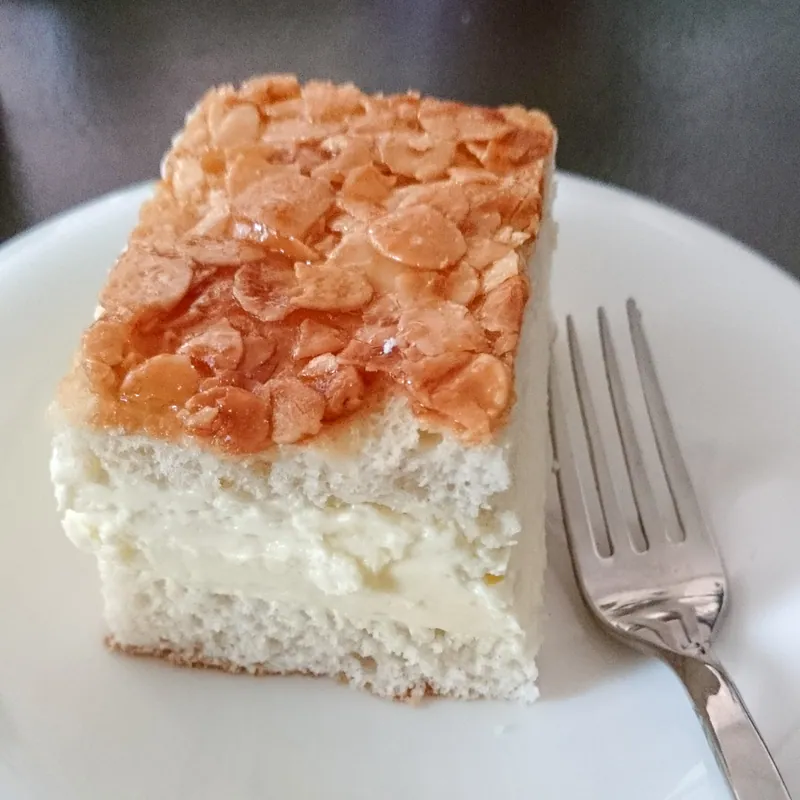
Compare broth-poached Königsberger Klopse with caper cream sauce, a cherry-and-chocolate Black Forest celebration cake and yeast-raised Bienenstich with vanilla cream by meal role, defining technique, active work, make-ahead value and serving temperature.
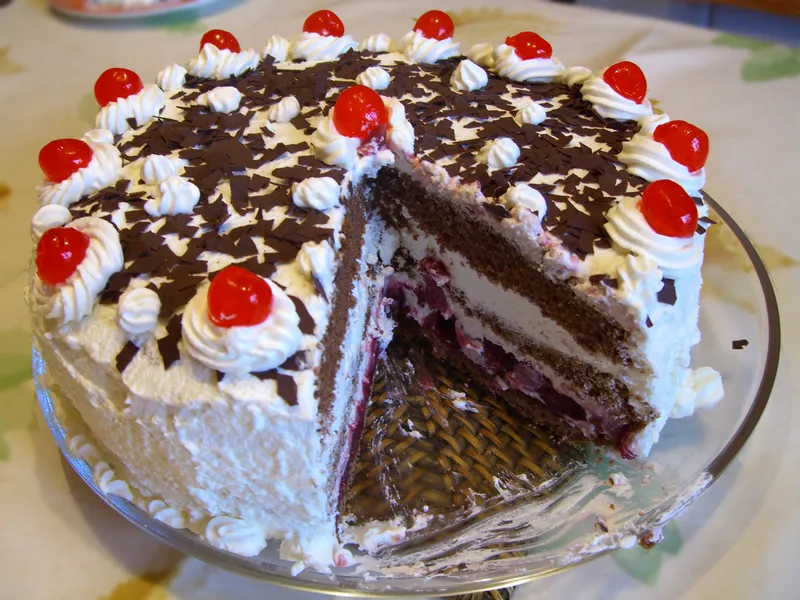
Three tender chocolate sponge layers are brushed with cherry syrup, filled with sour cherries and billowy cream, then finished with chocolate curls and cherry-topped rosettes.
A tender yeast cake bakes beneath a crackly honey-almond crown, then splits around a stable vanilla pastry-cream filling for a bakery-worthy celebration slice.
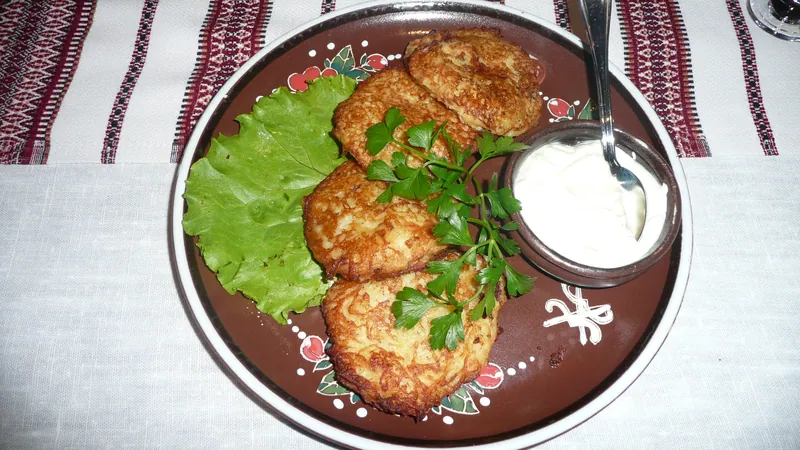
Crisp-edged grated potato pancakes hide a savory beef-and-onion center, then finish in the oven for an evenly cooked middle before being served with cool sour cream, parsley and lettuce like the photographed Ukrainian plate.
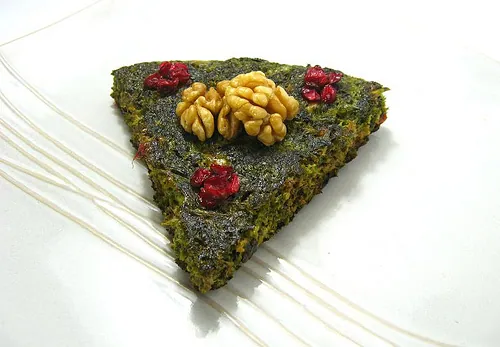
A deep-green, herb-packed Persian egg cake bakes up tender beneath a burnished crust, with toasted walnuts and tart barberries adding the exact crunch and jewel-bright finish shown in every wedge.
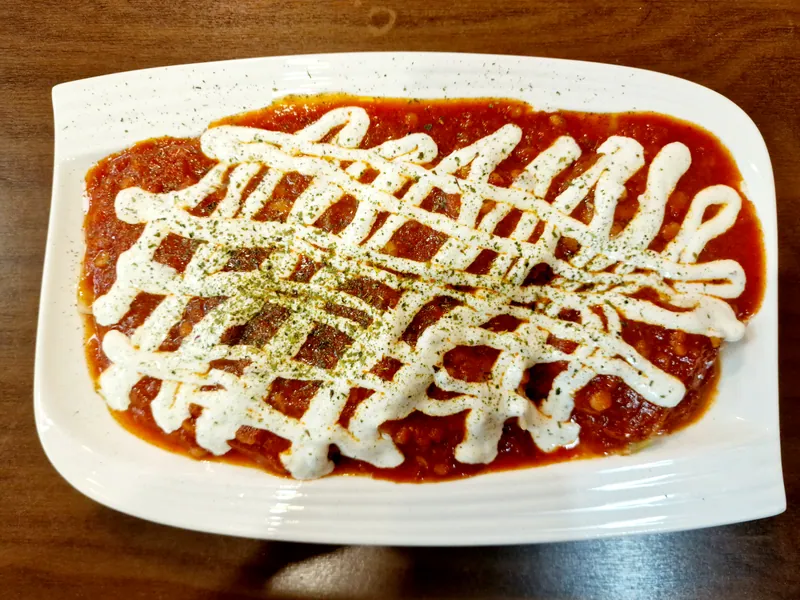
Tender leek-filled dumplings sit in a warmly spiced tomato sauce beneath cool garlic yogurt and dried mint—a practical wrapper-based route to an Afghan gathering dish with vivid hot-cold contrast.
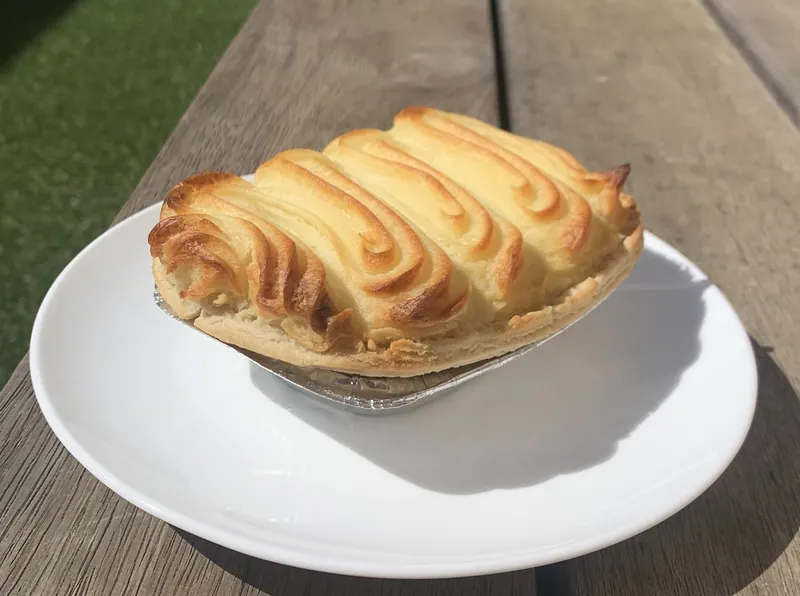
Six crisp pastry-shell cottage pies hold a thick beef-and-vegetable gravy beneath piped, deeply golden mashed-potato swirls for a freezer-friendly family dinner.
⏱ 125 min$2.85/serving
German Königsberger Klopse with Caper Cream Sauce, Potatoes & Green Beans
Screen stays awake when supported.
1. Make the panade and soften the onionCombine the torn bread and milk in a large bowl and press to moisten; rest 10 minutes. Meanwhile, melt 1 tablespoon butter in a small skillet over medium-low. Add the finely chopped onion and cook 6 to 8 minutes, stirring, until translucent but not browned. Stir in the anchovy paste for 30 seconds, then spread the mixture on a plate and cool for 5 minutes.
2. Mix and portion twelve tender meatballsMash the soaked bread into a smooth paste. Add the cooled onion mixture, beef, veal, egg, 1 tablespoon parsley, 1 1/4 teaspoons salt, 1/4 teaspoon pepper and nutmeg. Mix gently with a fork, then clean hands, only until evenly combined. With damp hands, shape 12 equal meatballs, about 2 2/3 ounces or 75 g each. Arrange on a clean tray and refrigerate while the broth heats.
3. Build a quiet poaching brothPour the beef broth into a wide 6-quart Dutch oven. Add the halved onion, bay leaves and peppercorns and bring just to a boil. Reduce to 180–190°F: the surface should tremble with only an occasional bubble. Boiling hard can make the meatballs tough and break their pale surfaces.
4. Poach and verify the meatballsLower the meatballs into the broth in one uncrowded layer, using two batches if your pot is narrower than 11 inches. Maintain 180–190°F and poach for 18 to 22 minutes, turning once, until several meatballs from different parts of the pot register at least 160°F through the center. Transfer them with a slotted spoon to a clean tray and tent loosely; never return cooked meatballs to the raw-meat tray.
5. Cook the potatoes until creamy insideWhile the meatballs poach, place the potatoes in a saucepan, cover with cold water by 1 inch and season the water generously with salt. Bring to a boil, then simmer 15 to 20 minutes, until a paring knife slides through the centers without resistance. Drain, return to the warm pan, cover and hold off heat.
6. Dress the warm green beansBring a second saucepan of salted water to a boil. Add the green beans and cook 4 to 6 minutes, until bright and crisp-tender. Drain well. In a serving bowl whisk the shallot, 2 tablespoons vinegar, Dijon, neutral oil, 1/4 teaspoon salt and remaining 1/4 teaspoon pepper. Toss in the warm beans so they absorb the dressing; set aside at room temperature while the sauce is finished.
7. Strain and measure the flavored brothPour the poaching broth through a fine-mesh strainer into a heatproof bowl and discard the onion, bay and peppercorns. Skim excess surface fat, then measure 3 1/2 cups broth for the sauce. If you have less, add water; if you have more, reserve the extra for reheating or soup. Wipe the Dutch oven dry.
8. Whisk a smooth caper cream sauceMelt the remaining 5 tablespoons butter in the Dutch oven over medium. Whisk in the flour and cook 2 minutes without browning. Add the measured broth about 1/2 cup at a time, whisking smooth after every addition. Simmer 5 to 7 minutes, whisking often, until the sauce coats a spoon. Reduce the heat to low and whisk in the cream, capers, caper brine, lemon zest, lemon juice, remaining 1/2 teaspoon salt and 1 tablespoon parsley. Do not let the cream sauce boil hard.
9. Warm the meatballs without overcookingReturn the cooked meatballs and any clean tray juices to the sauce. Heat at a bare simmer for 4 to 6 minutes, turning gently, until the centers are hot and the sauce clings to their pale surfaces. Taste only now and adjust with up to 1 additional teaspoon lemon juice or a small pinch of salt; capers, anchovies and broth vary in salinity.
10. Plate every photographed componentDivide the boiled potatoes among six warm plates and spoon sauce partly over them. Add two large meatballs per plate with visible capers and finish with the remaining parsley. Serve the dressed green beans alongside or in a small side bowl, matching the photographed presentation. Serve promptly while the sauce is fluid and the potatoes are hot.
 393 min