Ghanaian Red Red Black-Eyed Pea Stew with Fried Plantains
Creamy black-eyed peas simmered in a ginger-chile tomato and red palm oil sauce, served with caramelized ripe plantains for a budget-friendly Ghanaian meal.
Dice the onion, grate the ginger and mince the garlic. Pierce the whole chile twice with a paring knife so it perfumes the stew without releasing all its heat. Trim both ends from each plantain, slit the peel lengthwise and remove it. Cut the plantains on a 1/2-inch diagonal and set them aside in a single layer.
Sweat the onion in red palm oil
Heat 3 tablespoons of the red palm oil in a heavy 4- to 5-quart pot over medium-low heat. Add the onion and 1/4 teaspoon salt. Cook for 10 to 12 minutes, stirring often, until very soft and lightly golden but not crisp. Add the ginger and garlic; cook for 1 minute.
Concentrate the tomato base
Stir in the tomato paste, smoked paprika, coriander and thyme. Cook for 2 minutes, stirring, until the paste darkens slightly. Add the crushed tomatoes and the pierced chile. Raise the heat to medium and simmer uncovered for 10 to 12 minutes, stirring frequently, until the sauce is thick, glossy and no longer smells raw.
Simmer and partially mash the peas
Add the black-eyed peas, broth, remaining 1 tablespoon palm oil and remaining 1/2 teaspoon salt. Bring to a gentle simmer and cook uncovered for 12 to 15 minutes. Mash about one-third of the peas against the side of the pot, then stir them back in so the stew becomes creamy while retaining plenty of whole peas. Remove the whole chile before it splits; for more heat, mince a small piece and stir it in gradually.
Fry the ripe plantains
While the peas simmer, pour the neutral oil into a 12-inch heavy skillet and heat over medium to 340–350°F. Working in two batches, add the plantains in one uncrowded layer. Fry for 2 to 3 minutes per side, adjusting the heat to keep the oil in range, until deep golden-brown and tender. Transfer to a paper-towel-lined rack or plate and season with 1/4 teaspoon salt. Let the oil return to 340–350°F before the second batch.
Balance and rest the stew
Remove the stew from the heat and stir in the lime juice. Taste and adjust salt, chile and lime. The finished red red should mound on a spoon rather than run like soup; simmer for 2 to 4 minutes more if loose, or loosen with 1 tablespoon water at a time if too stiff. Rest for 5 minutes so the palm oil and tomato base settle around the peas.
Plate the defining combination
Divide the thick stew among four shallow bowls or banana-leaf-lined plates. Arrange the hot fried plantains alongside rather than burying them, preserving their caramelized edges. Sprinkle with gari, scallions and avocado only if using, and serve immediately.
Why this works
Why it worksSlowly softening the onion before adding tomato builds sweetness without leaving crunchy pieces in the creamy bean sauce.
Why it worksFrying the tomato paste and reducing the crushed tomatoes before the broth concentrates flavor and prevents a watery, raw-tasting stew.
Why it worksRed palm oil supplies the characteristic orange-red color and earthy richness; dividing it between the aromatics and final simmer keeps that flavor present without making the stew oily.
Why it worksMashing only one-third of the black-eyed peas thickens the sauce naturally while leaving enough whole beans for a satisfying texture.
Why it worksVery ripe plantains caramelize at a controlled 340–350°F, producing browned edges and a soft center without absorbing excessive oil.
Why it worksKeeping the plantains beside the stew until serving protects their fried surfaces from steam and mirrors the dish's defining bean-and-plantain contrast.
Useful kitchen gear
Tools that make this easier.
Compare the function and specifications first; skip anything your kitchen already handles well.
Paid links: As an Amazon Associate I earn from qualifying purchases. You pay no additional cost.
For dried beans, soak 1 1/4 cups dried black-eyed peas overnight, drain, cover with fresh water and simmer until tender, 35 to 50 minutes, before measuring 3 cups for the stew.
If red palm oil is unavailable, use 1/4 cup neutral oil plus 1 teaspoon sweet paprika. The texture will work, but the color and earthy palm flavor will be less characteristic.
A minced Fresno chile provides gentler heat than Scotch bonnet. Add it with the ginger rather than using the whole pierced-chile method.
For a fish-inclusive variation, fold in 4 ounces drained smoked mackerel after mashing the peas and simmer for 3 minutes; omit 1/4 teaspoon of the stew salt, taste, then adjust.
Boiled ripe plantains can replace fried plantains for a lower-oil meal, but they will be soft and sweet rather than caramelized.
Cook notes
Dish identity: red red is a Ghanaian black-eyed pea or cowpea stew colored by tomato and red palm oil and commonly served with fried ripe plantain. Some versions include fish; this primary recipe is plant-based, with a measured smoked-mackerel variation listed separately.
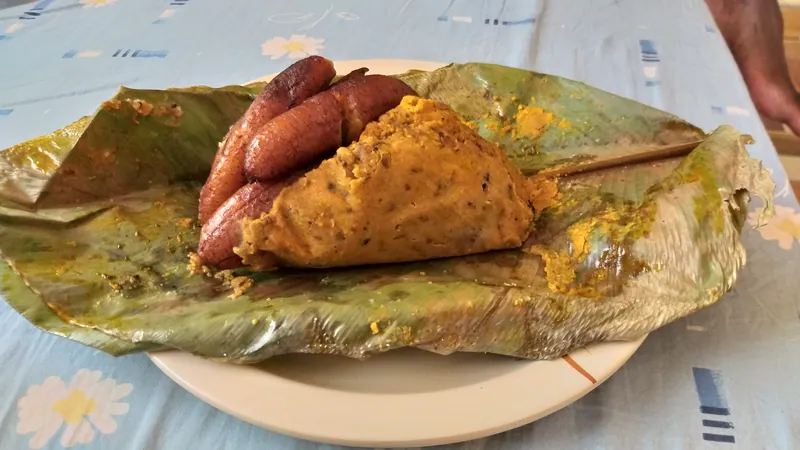
Photo-match record: the CC BY-SA photograph is identified by its Ghanaian creator as beans and fried ripe plantain, also known as Red Red or Gob3. It visibly shows a thick orange-red bean preparation beside deep-brown ripe plantain pieces on a banana leaf; the title, ingredients, method and alt text name every defining visible component. No fish garnish is visible, so the primary photographed version remains plant-based.
Texture checklist — tomato base reduced until glossy; one-third of the peas mashed; finished stew mounds on a spoon; plantains browned on both sides while soft at the center; stew and plantains held separately until plating.
Heat control: a pierced whole Scotch bonnet gives a controllable background heat. Remove it before the skin tears. If it bursts, remove it immediately, taste the stew and dilute with additional beans or tomato rather than adding sugar.
Gari is toasted or dried cassava granules. A small dry sprinkle adds a sandy crunch and absorbs some sauce; it is optional and should be added only at the table so it does not become pasty.
Safety note: keep the skillet handle turned inward, add plantains away from you, and never leave hot oil unattended. USDA leftovers guidance calls for prompt chilling and reheating cooked leftovers to 165°F.
Storage
Cool the stew and plantains in separate shallow containers and refrigerate at 40°F or below within 2 hours. Keep for up to 4 days. Reheat the stew in a saucepan over medium-low heat with 1 to 2 tablespoons water, stirring often, until it reaches 165°F. Reheat plantains on a lightly oiled sheet pan at 400°F for 8 to 10 minutes; they will soften but regain some browned edges. Freeze the stew without plantains for up to 3 months, thaw overnight in the refrigerator and reheat to 165°F. Fried plantains become mealy after freezing and are best made fresh.
Questions
Why is my red red watery instead of thick and creamy?
The tomato base or beans likely retained too much liquid. Reduce the tomatoes until glossy before adding broth, simmer the finished stew uncovered and mash about one-third of the peas. Canned black-eyed peas vary in moisture, so treat the 1 cup broth as a starting maximum and stop adding if the sauce already moves freely.
Do I need red palm oil to make Ghanaian red red?
Red palm oil gives the dish its characteristic color and earthy flavor, so it is the best choice when available. Neutral oil plus sweet paprika will still produce a useful black-eyed pea and tomato stew, but it should be described as a substitution because it does not reproduce palm oil's flavor. Use unrefined culinary red palm oil, not cosmetic palm oil.
How ripe should plantains be for red red?
Choose plantains with mostly black skins that yield slightly when pressed but are not leaking. Yellow-green plantains stay starchy and firm; fully ripe ones caramelize quickly and turn tender. Keep the oil near 345°F and fry in batches so the slices brown before they absorb excess oil.
West African tomato-and-chile meals by structure
Compare creamy Ghanaian red red with smoky Nigerian party jollof
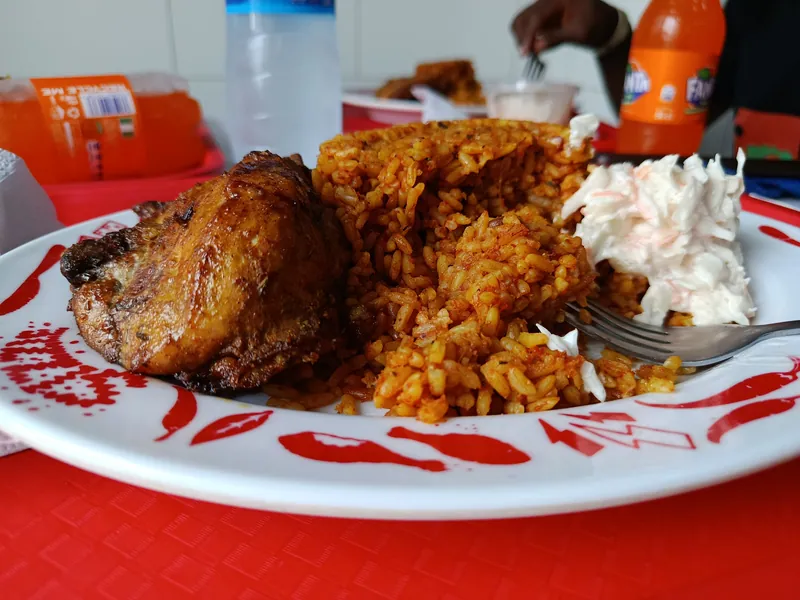
Choose Ghanaian red red for a budget plant-based black-eyed pea stew with fried ripe plantains, or Nigerian party jollof for a celebratory tomato-pepper rice platter with fried chicken; compare primary starch, protein, heat source, texture, active work and make-ahead strategy.
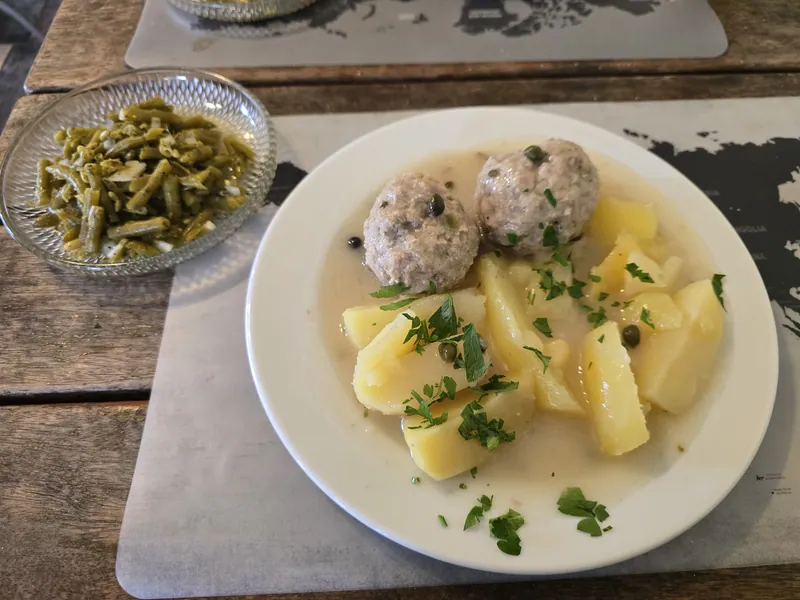
Tender beef-and-veal meatballs poach gently before their broth becomes a lemony caper cream sauce, with boiled potatoes and a sharp green-bean salad completing the photographed German plate.
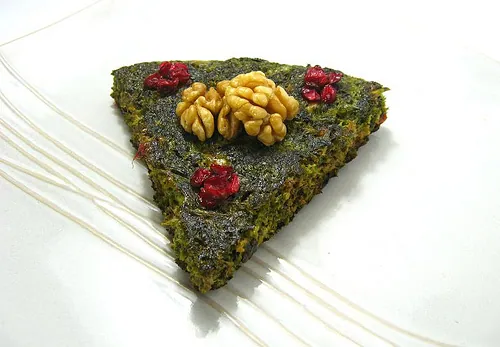
A deep-green, herb-packed Persian egg cake bakes up tender beneath a burnished crust, with toasted walnuts and tart barberries adding the exact crunch and jewel-bright finish shown in every wedge.
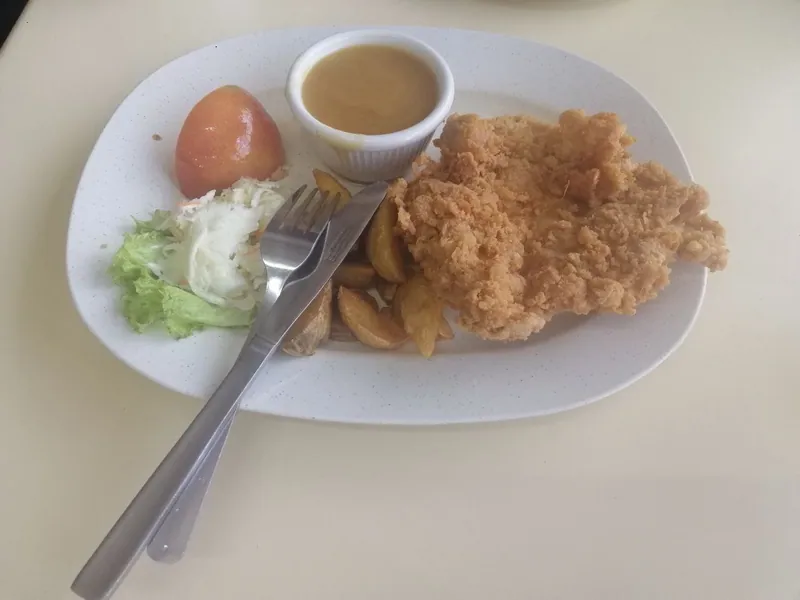
Craggy, juicy fried chicken cutlets are paired with crisp oven fries, a smooth onion-Worcestershire brown gravy and cool cabbage salad for a complete Malaysian kopitiam-style dinner.
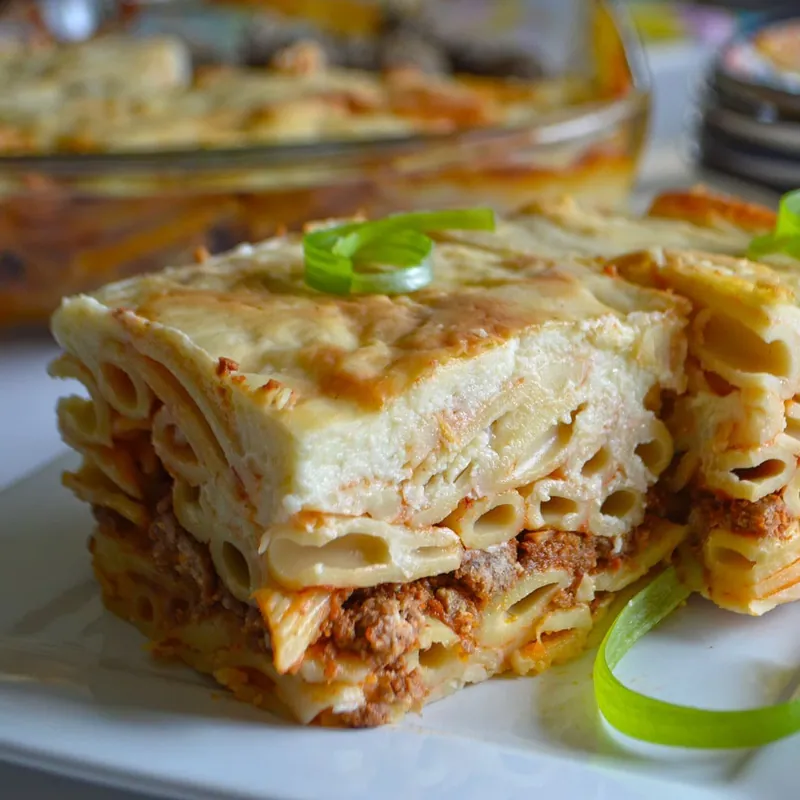
A sliceable Egyptian pasta bake layered with penne, warmly spiced beef and a thick, silky béchamel, with reliable make-ahead and doneness cues.
⏱ 105 min3.15/serving
Ghanaian Red Red Black-Eyed Pea Stew with Fried Plantains
Screen stays awake when supported.
1. Prepare the aromatics and plantainsDice the onion, grate the ginger and mince the garlic. Pierce the whole chile twice with a paring knife so it perfumes the stew without releasing all its heat. Trim both ends from each plantain, slit the peel lengthwise and remove it. Cut the plantains on a 1/2-inch diagonal and set them aside in a single layer.
2. Sweat the onion in red palm oilHeat 3 tablespoons of the red palm oil in a heavy 4- to 5-quart pot over medium-low heat. Add the onion and 1/4 teaspoon salt. Cook for 10 to 12 minutes, stirring often, until very soft and lightly golden but not crisp. Add the ginger and garlic; cook for 1 minute.
3. Concentrate the tomato baseStir in the tomato paste, smoked paprika, coriander and thyme. Cook for 2 minutes, stirring, until the paste darkens slightly. Add the crushed tomatoes and the pierced chile. Raise the heat to medium and simmer uncovered for 10 to 12 minutes, stirring frequently, until the sauce is thick, glossy and no longer smells raw.
4. Simmer and partially mash the peasAdd the black-eyed peas, broth, remaining 1 tablespoon palm oil and remaining 1/2 teaspoon salt. Bring to a gentle simmer and cook uncovered for 12 to 15 minutes. Mash about one-third of the peas against the side of the pot, then stir them back in so the stew becomes creamy while retaining plenty of whole peas. Remove the whole chile before it splits; for more heat, mince a small piece and stir it in gradually.
5. Fry the ripe plantainsWhile the peas simmer, pour the neutral oil into a 12-inch heavy skillet and heat over medium to 340–350°F. Working in two batches, add the plantains in one uncrowded layer. Fry for 2 to 3 minutes per side, adjusting the heat to keep the oil in range, until deep golden-brown and tender. Transfer to a paper-towel-lined rack or plate and season with 1/4 teaspoon salt. Let the oil return to 340–350°F before the second batch.
6. Balance and rest the stewRemove the stew from the heat and stir in the lime juice. Taste and adjust salt, chile and lime. The finished red red should mound on a spoon rather than run like soup; simmer for 2 to 4 minutes more if loose, or loosen with 1 tablespoon water at a time if too stiff. Rest for 5 minutes so the palm oil and tomato base settle around the peas.
7. Plate the defining combinationDivide the thick stew among four shallow bowls or banana-leaf-lined plates. Arrange the hot fried plantains alongside rather than burying them, preserving their caramelized edges. Sprinkle with gari, scallions and avocado only if using, and serve immediately.
 105 min