Heat the oven to 350°F with a rack in the center. Spread the hazelnuts and whole almonds on one rimmed sheet pan and the sliced almonds on a separate small pan. Toast the sliced almonds for 5 to 7 minutes and the whole nuts for 8 to 10 minutes, stirring each once, until fragrant and lightly golden. Cool completely. If the hazelnuts have papery skins, rub off the loose portions in a clean towel; a little skin can remain. Keep the sliced almonds separate for the border.
Grind the nut flour without making paste
Put the cooled hazelnuts and whole almonds in a food processor with 2 tablespoons of the measured flour. Pulse in short bursts until the mixture resembles fine, slightly pebbly meal. Stop before the nuts become damp or clump into butter. Whisk the ground nuts with the remaining flour, cinnamon, cloves and salt in a bowl.
Mix the lemon-spiced pastry
Beat the butter, sugar and lemon zest with an electric mixer on medium for 2 to 3 minutes, until smooth and slightly lighter but not fluffy. Beat in the whole egg and yolk, scraping the bowl. Add the nut-flour mixture and mix on low just until no dry streaks remain. The dough will be softer than ordinary pie dough. Weigh or divide it into a two-thirds portion and a one-third portion, flatten each into a disk, wrap and chill for 60 minutes.
Line the pan and prepare the lattice
Butter a 9-inch fluted tart pan with a removable bottom. Press the larger dough disk evenly across the base and about 3/4 inch up the side, aiming for a 1/4-inch thickness; chill the lined pan. Roll the smaller disk between two lightly floured sheets of parchment into a 9-inch round about 1/4 inch thick. Cut it into ten strips about 1/2 inch wide, slide the parchment onto a tray and freeze for 10 minutes so the strips become easy to lift.
Fill and weave the photographed top
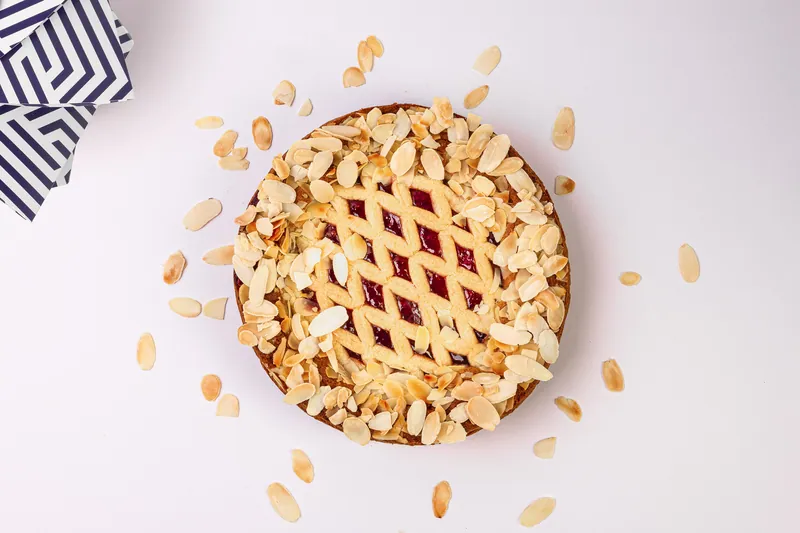
Stir the red currant preserves with the lemon juice until spreadable, then smooth them over the chilled base, stopping 1/4 inch from the pastry edge. Lay five cold dough strips parallel across the jam and weave the remaining five across them at right angles, lifting alternating strips as you work. Trim the ends and press them gently into the side crust. Whisk the egg white with 1 teaspoon water and brush it lightly over the lattice and rim. Press the toasted sliced almonds in a generous ring around the outside, matching the verified photograph while leaving the red jam visible through the center lattice.
Bake until the center is visibly set
Set the tart pan on a rimmed sheet pan and bake at 350°F for 42 to 48 minutes. Rotate once after 25 minutes. The pastry should be deep golden all the way across, the almond border toasted and the jam bubbling through several openings near the center, not only at the edge. If the almonds darken too quickly, lay a loose ring of foil over the rim for the final 10 minutes. The fully baked pastry and bubbling filling are the doneness checks; do not serve a pale, doughy lattice.
Cool completely before unmolding
Cool in the pan on a rack for 60 minutes. Set the pan over a wide can and lower the outer ring, then slide the torte from the base only when it is completely firm. For the neatest lattice slices and most settled flavor, cover after cooling and wait 4 hours or overnight before cutting into 10 wedges with a thin serrated knife.
Why this works
Why it worksGrinding toasted nuts with a little flour absorbs surface oil and helps the processor create a fine meal before the hazelnuts and almonds turn into nut butter.
Why it worksCool, softened butter blends smoothly without aerating the pastry excessively, so the finished crust stays tender and defined rather than puffing out of its lattice pattern.
Why it worksA full hour of chilling firms the butter and hydrates the flour; the brief freezer rest makes the soft nut-rich strips sturdy enough to weave without stretching.
Why it worksRed currant preserves provide the sharp fruit flavor and deep ruby color traditionally associated with the torte, while lemon keeps a sweet commercial preserve from tasting flat.
Why it worksBaking until jam bubbles near the center confirms that heat has reached the thickest part and removes excess moisture, helping the slices hold after their long cooling rest.
Useful kitchen gear
Tools that make this easier.
Compare the function and specifications first; skip anything your kitchen already handles well.
Paid links: As an Amazon Associate I earn from qualifying purchases. You pay no additional cost.
If red currant preserves are unavailable, use a smooth, tart raspberry preserve in the same weight. The torte will still set and slice well, but its flavor will be a variation rather than the traditional red-currant profile shown in the photograph.
For an all-almond version, replace the hazelnuts with 90 g additional whole blanched almonds. The crust will be milder and slightly less earthy but the dough method and timing remain the same.
A 9-inch springform pan can replace the fluted tart pan. Line the base with parchment and press the dough only 3/4 inch up the side so the finished torte keeps a low tart-like profile.
Orange zest can replace lemon zest, but retain the tablespoon of lemon juice in the jam so the filling has enough acidity to balance the rich nut crust.
Seedless preserves give the cleanest cut surface. If your red currant preserve contains a few seeds, use it as-is rather than thinning or straining away fruit solids.
Cook notes
Austria's official traditional-food register describes Linzer Torte as a nut-rich short pastry, usually filled with red currant jam and finished with a pastry lattice. This recipe uses those defining elements while providing weights and visual doneness checks for a home kitchen.
The 205-minute total includes 60 minutes of dough chilling, a 10-minute lattice firming rest and 60 minutes of cooling. The optional longer rest before slicing is hands-off and can extend the elapsed time without adding work.
The CC BY-SA 4.0 photograph was inspected at full size before publication. It clearly shows one round torte with a golden lattice, deep-red currant filling and a broad sliced-almond border; the title, final assembly, plating direction and alt text are limited to those visible features.
Nut dough can look crumbly before it is fully mixed. Pinch a small piece: if it holds together, stop mixing. Extra liquid makes the lattice spread and obscures the jam openings.
This recipe contains hazelnuts, almonds, wheat, egg and dairy. Keep it separate from foods for guests with those allergies, and clean the processor, mixer and work surface carefully to avoid cross-contact.
Calories and cost are estimates for one of 10 wedges and include the full measured amount of jam and almonds; brand, nut price and slice size will change both.
Storage
Once completely cool, keep the torte tightly covered at cool room temperature for up to 3 days; its nut pastry softens pleasantly around the jam. If the kitchen is warmer than 75°F, refrigerate it for up to 5 days and bring slices to room temperature for 30 minutes before serving. Freeze the whole cooled torte or individual wedges, double-wrapped, for up to 2 months. Thaw overnight in the refrigerator, then uncover and stand at room temperature; do not microwave, which makes the lattice soft.
Questions
Why did my Linzer torte lattice crack while I was weaving it?
The strip was either too cold and brittle or too warm and soft. Let a cracking strip stand for 1 to 2 minutes, then lift it with a thin offset spatula. If strips stretch or stick, return the tray to the freezer for 5 minutes. Small breaks can be pinched together because the nut dough bakes into a rustic surface.
Can I make Linzer torte ahead for a holiday meal?
Yes. Bake it one or two days ahead, cool it completely and keep it covered at cool room temperature. The rest lets the spiced nut pastry and tart jam meld while the lattice remains sliceable. Add no powdered sugar before storage; this photographed version uses toasted almonds, not a sugar coating.
How do I know the bottom is baked without cutting the torte?
Use a light-colored metal pan on a preheated center rack and wait for three signals: an evenly deep-golden lattice, toasted side crust and jam bubbling through openings close to the center. Baking on a rimmed metal sheet also conducts heat into the removable base. A pale lattice with bubbles only at the outer edge needs more time.
Three tender chocolate sponge layers are brushed with cherry syrup, filled with sour cherries and billowy cream, then finished with chocolate curls and cherry-topped rosettes.
A deeply dimpled, olive-oil-rich focaccia with crisp edges, a tender open crumb, sweet tomatoes, briny black olives and ribbons of red onion.
⏱ 210 min$0.65/serving
Austrian Linzer Torte with Red Currant Jam & Toasted Almonds
Screen stays awake when supported.
1. Toast the three nut portionsHeat the oven to 350°F with a rack in the center. Spread the hazelnuts and whole almonds on one rimmed sheet pan and the sliced almonds on a separate small pan. Toast the sliced almonds for 5 to 7 minutes and the whole nuts for 8 to 10 minutes, stirring each once, until fragrant and lightly golden. Cool completely. If the hazelnuts have papery skins, rub off the loose portions in a clean towel; a little skin can remain. Keep the sliced almonds separate for the border.
2. Grind the nut flour without making pastePut the cooled hazelnuts and whole almonds in a food processor with 2 tablespoons of the measured flour. Pulse in short bursts until the mixture resembles fine, slightly pebbly meal. Stop before the nuts become damp or clump into butter. Whisk the ground nuts with the remaining flour, cinnamon, cloves and salt in a bowl.
3. Mix the lemon-spiced pastryBeat the butter, sugar and lemon zest with an electric mixer on medium for 2 to 3 minutes, until smooth and slightly lighter but not fluffy. Beat in the whole egg and yolk, scraping the bowl. Add the nut-flour mixture and mix on low just until no dry streaks remain. The dough will be softer than ordinary pie dough. Weigh or divide it into a two-thirds portion and a one-third portion, flatten each into a disk, wrap and chill for 60 minutes.
4. Line the pan and prepare the latticeButter a 9-inch fluted tart pan with a removable bottom. Press the larger dough disk evenly across the base and about 3/4 inch up the side, aiming for a 1/4-inch thickness; chill the lined pan. Roll the smaller disk between two lightly floured sheets of parchment into a 9-inch round about 1/4 inch thick. Cut it into ten strips about 1/2 inch wide, slide the parchment onto a tray and freeze for 10 minutes so the strips become easy to lift.
5. Fill and weave the photographed topStir the red currant preserves with the lemon juice until spreadable, then smooth them over the chilled base, stopping 1/4 inch from the pastry edge. Lay five cold dough strips parallel across the jam and weave the remaining five across them at right angles, lifting alternating strips as you work. Trim the ends and press them gently into the side crust. Whisk the egg white with 1 teaspoon water and brush it lightly over the lattice and rim. Press the toasted sliced almonds in a generous ring around the outside, matching the verified photograph while leaving the red jam visible through the center lattice.
6. Bake until the center is visibly setSet the tart pan on a rimmed sheet pan and bake at 350°F for 42 to 48 minutes. Rotate once after 25 minutes. The pastry should be deep golden all the way across, the almond border toasted and the jam bubbling through several openings near the center, not only at the edge. If the almonds darken too quickly, lay a loose ring of foil over the rim for the final 10 minutes. The fully baked pastry and bubbling filling are the doneness checks; do not serve a pale, doughy lattice.
7. Cool completely before unmoldingCool in the pan on a rack for 60 minutes. Set the pan over a wide can and lower the outer ring, then slide the torte from the base only when it is completely firm. For the neatest lattice slices and most settled flavor, cover after cooling and wait 4 hours or overnight before cutting into 10 wedges with a thin serrated knife.
 393 min