Blade style, thickness control, storage, and hand protection matter more than restaurant-looking slices.
Where it helps
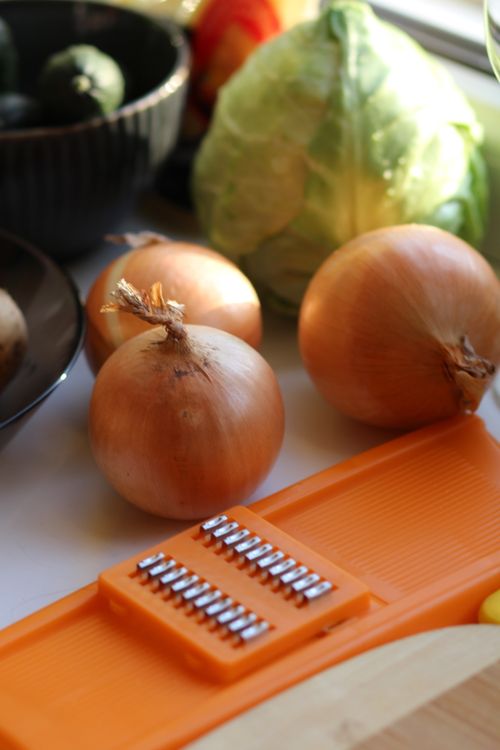
A mandoline creates consistent slices for potatoes, gratins, slaws, onions, cucumbers, and pickles. Consistency improves even cooking, but the tool is unnecessary when a knife already handles the occasional small batch.
Fixed versus adjustable
Fixed handheld slicers are compact and straightforward. Adjustable platforms offer more thicknesses and julienne blades but create additional settings and parts. The adjustment should lock positively and remain readable.
Use the guard
A food holder is the primary safety tool and should grip different shapes without forcing fingers near the blade. Stop before the ingredient becomes too small to hold securely. Saving the final half inch is not worth the risk.
Cut-resistant gloves are backup
A properly rated glove can add protection but does not replace the holder or safe technique. It may not resist every blade or puncture. Follow the glove rating and mandoline instructions.
Stability matters
Counter models need nonslip feet and a stable angle. Handheld models should seat securely over a bowl or board. Never rush because the slicer feels faster than a knife.
Store the blade covered
The cutting surface should lock, retract, or accept a guard for storage. Loose julienne blades need a case. If safe storage is awkward, the tool will become a cabinet hazard.
Compare the useful options
Use the criteria above first. These links open current Amazon category results, so you can compare specifications, availability, and price.