Shredding cheese and zesting citrus are different jobs. Match tooth size and stability to the ingredient.
Box graters handle volume
Large and medium faces shred blocks of cheese, carrots, zucchini, potatoes, and cabbage quickly. A broad base supports the tool on a board, and four-sided models may add slicer and fine-grating surfaces.
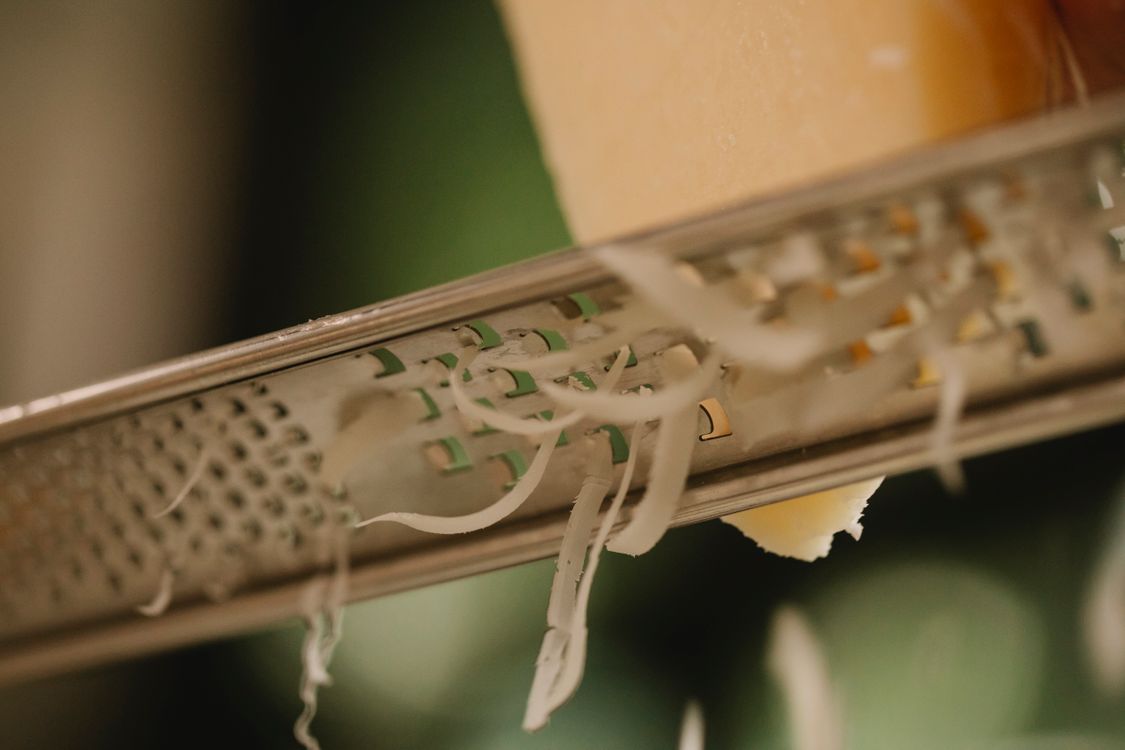
Rasp graters handle fine work
A narrow rasp produces citrus zest, fine hard cheese, garlic, ginger, nutmeg, and chocolate. It removes less bitter citrus pith when used with light pressure and makes airy cheese for finishing.
Sharpness changes pressure
Sharper teeth cut with less force and reduce slipping, though they demand careful handling. Dull graters encourage pressing and crushing. Protective covers matter in storage and when reaching into a drawer.
Stability and clearance
A box grater needs a nonslip base and enough interior space for food to fall freely. A rasp needs a handle that stays secure when damp and a tip that can brace against a board or bowl.
Cleaning
Rinse soon after use before cheese and ginger dry into the teeth. Brush or wipe in the direction opposite the cutting edges. Follow dishwasher guidance; hand washing can preserve sharpness and protect hands from a crowded utensil basket.
The compact answer
Most cooks need one sturdy coarse grater and one fine rasp. Combination tools save space only when both surfaces are easy to use and safe to cover.
Compare the useful options
Use the criteria above first. These links open current Amazon category results, so you can compare specifications, availability, and price.